
Reviewed · PHI PHI ISLANDS TOURS
Dive Trip to Phi Phi from Phuket for certified divers
A long boat day sounds like work. This one feels like a plan. You get a full day of three guided underwater sessions around Phi Phi, with small groups and smart site changes based on conditions.
Two things I really like: the small group size (max four divers per guide, and up to 20 people total) and the fact that tanks and weights are included, so you spend less time fussing and more time looking closely at wildlife. You’ll also get solid food onboard—breakfast, a buffet lunch, fruit, plus hot drinks.
One caution: the Phi Phi marine park admission fee isn’t included (THB600 per person), and the day depends on weather and boat operations, so you should expect a little variability in timing and exact sites.
In This Review
- Key points to know before you go
- Phi Phi in One Day: Three Different Underwater Sessions, One Smooth Flow
- Certified-Only Rules (and Why They’re Worth It)
- Price and What You Actually Get for Your Money
- Getting to the Water: Pickup, Timing, and a Realistic Morning
- Morning Stop at Koh Bida Nok: Corals, Schooling Fish, and Good Visibility
- Lunch on the Water: Real Food Break, Not a Snack Interruption
- Second Stop Options: Koh Bida Nai or Phi Phi Le for Walls and Bigger Scenes
- Third Session on the Way Back: Shark Point or Koh Doc Mai
- Guides Onboard: Small-Group Control Makes Wildlife Spotting Easier
- Boat Comfort and Crowding: What to Watch for on Busier Days
- Logistics That Matter: Gear, Insurance, and Where Transfers Work
- Who Should Book This Phi Phi Scuba Day—and Who Might Want Another Option
- Should You Book It?
- FAQ
- Is this trip only for certified divers?
- What dive sites will I visit?
- Can non-divers join this trip?
- What’s included in the price?
- What are the extra costs?
- How many divers are there per guide?
- Where does the trip start?
- Does weather affect the trip?
Key points to know before you go
- Max four divers per guide for calmer, more personal coaching underwater
- Three different underwater sessions: morning coral, mid-day wall or schooling fish, and a later macro/hunter stop
- Meals included: breakfast, buffet lunch, fruit, water, and coffee/tea onboard
- Phi Phi marine park fee extra: budget THB600 per person
- Certified divers only (you’ll need proof of experience), but non-divers can join the boat
More ways to reach Phi Phi, Maya Bay and the limestone lagoons
- Phuket: Maya, Phi Phi, and Bamboo Island with Buffet Lunch★ 4.6 · 19,266 reviews
- Phi Phi Islands Adventure Day Trip w/ Seaview Lunch by V. Marine★ 5.0 · 3,295 reviews
- Phuket: Phi Phi Islands and Maya Bay Day Trip with Lunch★ 4.4 · 3,204 reviews
- Phi Phi & Bamboo Islands: Premium Day Trip w/ Seaview Lunch★ 4.8 · 1,856 reviews
Phi Phi in One Day: Three Different Underwater Sessions, One Smooth Flow
This is a day trip built for certified divers who want variety without a complicated itinerary. The goal is simple: two sessions in the Phi Phi area early, then a third session on the way back toward Phuket. Most of the day happens on the water, but it’s paced well—gear setup, two underwater blocks, a real lunch break, then another underwater block when everyone’s still energized.
The experience is also designed around group control. With at most four divers per guide, you’re less likely to get lost in the chaos of a big boat, and the guide can keep an eye on buoyancy, spacing, and comfort. That matters more than people think. In current, low visibility, or when you’re chasing small critters, having a guide who can keep your plan on track makes the whole day nicer.
One more detail I appreciate: the sites can change with conditions. You don’t just follow a fixed “script.” If the water isn’t right for one area, the operator shifts you to a suitable option.
Certified-Only Rules (and Why They’re Worth It)
This trip is for certified divers only. You’ll need proof of diving experience—either 10 dives total or that your last dive was within the previous six months. That requirement keeps the group safer and helps the dive guides set expectations right away.
You should also have moderate physical fitness. That’s not about athleticism. It’s about handling boat steps, gearing up, and staying comfortable during surface intervals.
Non-diving relatives can join the boat. So if you’re traveling with someone who wants the island scenery and boat time but doesn’t want to get in the water, that’s workable. Just know the underwater sessions are for the certified divers in the group.
Price and What You Actually Get for Your Money
At about $103.26 per person, this package is priced as an all-in day with the basics covered. Here’s what you should mentally separate: included comfort versus expected extras.
Included in the price:
- Hotel pickup and drop-off from Patong, Karon, Kata, Chalong, Rawai, and Nai Harn areas
- Breakfast, lunch, fruit, drinking water, and coffee/tea
- Dive guide, tanks, and weights
- Personal accident insurance
Not included:
- Marine park admission fee for Phi Phi from Phuket: THB600 per person
- Dive equipment rental: 600 Baht for a full set
This setup is good value if you’re already traveling with a suit and fins and you’re comfortable using the included tanks and weights. If you still need gear, add that 600 Baht and you’ll get a clearer total picture.
Also note: pickup drop-off is not listed outside those specific areas. If your hotel is off the usual routes, you might need to arrange your own way to the meeting point at Chalong pier.
Getting to the Water: Pickup, Timing, and a Realistic Morning
Your day typically starts with pickup from your hotel area, then you head to the Chalong pier meeting point. The published start time is 8:00am, and the meeting location is ท่าเรือฉลอง (Chalong pier).
Morning logistics can be the difference between a relaxed start and a stressed one. Even when everything is organized, Phuket mornings can move slowly. I’d plan to be ready a bit early for pickup, especially if you’re staying in a busy area like Patong where timing can get messy.
Once you’re on the boat, the rhythm usually becomes predictable: gear checks, then you’re off to the first underwater session. From there, the day runs in blocks with surface breaks and lunch.
More reef stops, snorkel spots and dive sites near Phuket






Morning Stop at Koh Bida Nok: Corals, Schooling Fish, and Good Visibility
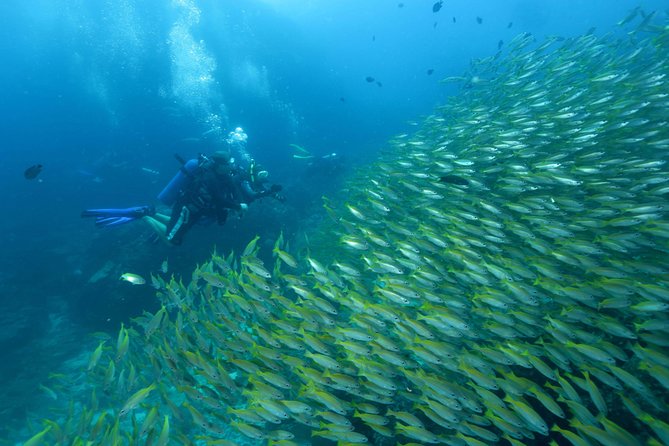
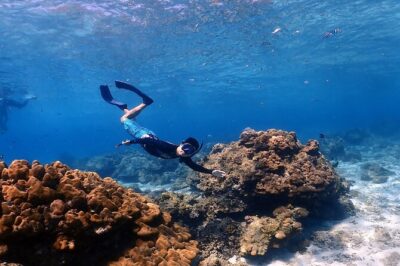
The first underwater session is normally at Koh Bida Nok, one of the Phi Phi favorites for coral growth and active schooling fish. Expect the kind of dive experience where you can look left, look right, then look up and still find something interesting.
A common pattern here is watching snapper get hunted by trevallies—classic predator-prey energy. Even if you don’t see that exact scene every time, the site reputation is built on fish action plus healthy coral cover.
Visibility tends to be quite nice here, which helps for both wide-angle watching and calmer photography. It’s a great “warm-up” site because it’s not overly complex compared with wall systems or cavern dives.
Lunch on the Water: Real Food Break, Not a Snack Interruption
Between underwater sessions you get a surface interval with food and drinks. You’ll have breakfast onboard, and after the first session you’ll switch to a buffet lunch plus a drink during the surface break.
This matters on a long day. When the lunch is filling and you get water, fruit, and hot drinks, you’re less likely to feel drained before the afternoon session. It also helps if you’re prone to getting cold or low on energy between descents.
If you’re the type who enjoys comparing what you saw underwater, lunch is the time to do it. You can ask your guide what they’re expecting next, and it often helps you tune your eyes for macro life and smaller critters later.
Second Stop Options: Koh Bida Nai or Phi Phi Le for Walls and Bigger Scenes
After lunch, you head to the second site, which can be either Koh Bida Nai or Phi Phi Le, depending on conditions.
Koh Bida Nai is often chosen for how it delivers the kind of underwater viewing that feels slightly more “structured” than open coral gardens. Phi Phi Le can also bring dramatic topography—something that gives your eyes a direction to work. In other words, it’s easier to spot changes in depth, behavior, and current patterns.
This is a good time for photos too, especially if you like reef shots with a sense of depth. If your buoyancy is comfortable, you can hover and watch fish traffic without chasing every movement.
Third Session on the Way Back: Shark Point or Koh Doc Mai
The last underwater session happens while heading back toward Phuket. This is one of the most interesting parts of the day because the trip doesn’t just repeat the morning’s style.
You’ll usually go to either Shark Point or Koh Doc Mai, based on conditions:
- Shark Point: A site known for underwater pinnacles, with a mix of hard and soft corals and plenty of marine life. There’s also a chance of leopard sharks.
- Koh Doc Mai: Often described as a wall dive with two caverns and excellent macro life. If you love nudibranchs, small critters, and close-up inspection, this is the kind of place that can make you slow down (in a good way).
You’ll also get a snack or drink during the run between the second and third sessions, so you aren’t going into the final underwater block hungry or dehydrated.
One extra detail worth knowing: on some days, the itinerary can include Turtle Rock in the mix. So if you’re watching the guides’ plan changes on the water, be open-minded. One extra reef structure can shift what you see from “schools and coral” to “structure and critters.”
Guides Onboard: Small-Group Control Makes Wildlife Spotting Easier
The guides are a major part of the value here. I’ve seen how a great guide can turn a normal trip into a better one by managing pace and helping you notice things you’d miss while busy thinking about your own gear.
On at least one high-rated day, the guide was Mischa, and the standout detail was that he didn’t just lead the group—he also supported divers with photos and videos. He also pointed out hard-to-spot nudibranchs and refreshed divers on gear when needed. That kind of calm assistance can be the difference between “I saw fish” and “I understood what I was seeing.”
Even if your guide isn’t Mischa, the operator’s small-group approach supports this same idea: fewer divers around you means less scrambling, more watching, and more time for the guide to help with technique.
Boat Comfort and Crowding: What to Watch for on Busier Days
The overall boat setup sounds manageable because the operator keeps divers grouped tightly with guides. Still, real-world days can vary. Some reports point to a boat that felt crowded and a possible wait after one underwater session when the next boat segment didn’t arrive on the expected schedule.
So here’s my practical advice:
- Bring patience for surface time. Boats run on schedules, but sea conditions can change the plan.
- If you hate tight spaces, aim for days you don’t expect peak crowds.
- Keep your buoyancy and gear routine consistent. The more automatic your process is, the less annoying any delay feels.
It’s not a deal-breaker for most people. But it’s worth being mentally ready.
Logistics That Matter: Gear, Insurance, and Where Transfers Work
You won’t need to rent tanks or weights. Those are included, plus there’s personal accident insurance in the package.
If you need rental gear, it’s 600 Baht for a full set. That includes the stuff you’d rather not carry on your flight. Just factor this into your budget early.
Transfer coverage is straightforward but limited: pickup drop-off is listed for Patong, Karon, Kata, Chalong, Rawai, and Nai Harn. If you’re outside those areas, you may have to meet at the Chalong pier instead.
Also keep in mind that the trip requires good weather. If conditions aren’t suitable, you should expect the operator to adjust or offer an alternate date.
Who Should Book This Phi Phi Scuba Day—and Who Might Want Another Option
This is a smart choice if you:
- Are a certified diver with at least 10 dives, or you’ve dived within the last six months
- Want three distinct underwater sessions in one day
- Prefer small-group attention and a guide who can help with spotting wildlife
- Like a trip that includes real meals and drinks instead of vending-machine energy
It might not be the best fit if you:
- Strongly dislike boats or any possibility of waiting on the surface
- Are hoping for a fully fixed itinerary no matter the conditions
- Need a lot of equipment help beyond tanks/weights (you may need to rent the full set)
If you’re a non-diver, you can join the boat, but the schedule is still built around certified divers’ underwater sessions. So the value for non-divers is mainly scenery, boat time, and being part of the day.
Should You Book It?
If you’re certified and you want a full Phi Phi day without extra planning stress, I think this is a strong pick. The small-group format and included tanks/weights do real work for your comfort. The sites make sense together too: coral and schooling fish early, another Phi Phi option mid-day, then either shark-life pinnacles or macro-rich caverns for the finale.
Just budget for the Phi Phi marine park fee (THB600) and arrive ready for the kind of morning logistics Phuket can throw at you. If you do that, you’re set up for a day that’s active, structured, and built around seeing different sides of Phi Phi.
FAQ
Is this trip only for certified divers?
Yes. It’s for certified divers only. You’ll be asked for proof of diving experience (either 10 dives total or your last dive within the previous 6 months).
What dive sites will I visit?
The plan can change with conditions, but the first underwater session is normally at Koh Bida Nok. The second can be Koh Bida Nai or Phi Phi Le. The third is usually Shark Point or Koh Doc Mai on the way back to Phuket.
Can non-divers join this trip?
Non-diving relatives can join the boat. The underwater sessions themselves are for certified divers only.
What’s included in the price?
Hotel pickup and drop-off from Patong, Karon, Kata, Chalong, Rawai, and Nai Harn areas, breakfast, lunch, fruit, drinking water, coffee and tea, a dive guide, tanks and weights, and personal accident insurance.
What are the extra costs?
You’ll need to pay the Phi Phi from Phuket admission fee (THB600 per person). Dive equipment rental is available for 600 Baht for a full set, if you don’t bring your own.
How many divers are there per guide?
There’s a maximum of four divers per guide, and the trip has a maximum of 20 travelers.
Where does the trip start?
It starts at ท่าเรือฉลอง (Chalong pier). The start time is 8:00am.
Does weather affect the trip?
Yes. The trip requires good weather. If it’s canceled due to poor weather, you’ll be offered a different date or a full refund.
More Tour Reviews in Phuket


Under the Andaman, More Reefs

Phi Phi & Maya Bay, More Trips


Keep exploring Phuket and the Andaman coast

Phi Phi Islands Tours, compared.
 ★ 4.6Maya, Phi Phi, and Bamboo Island with Buffet LunchFrom $6119,266 reviews
 ★ 5.0Phi Phi Islands Adventure Day Trip w/ Seaview Lunch by V. MarineFrom $913,295 reviews
 ★ 4.4Phi Phi Islands and Maya Bay Day Trip with LunchFrom $343,204 reviews
 ★ 4.8Phi Phi & Bamboo Islands: Premium Day Trip w/ Seaview LunchFrom $1131,856 reviews
 ★ 4.2PhiPhi, Maya Bay & Khai Island Day Tour with LunchFrom $471,607 reviews
 ★ 4.9Phi Phi Sunrise Boat Tour to Bamboo and Khai IslandFrom $1251,476 reviews
Luxury Small Group Phi Phi Sunrise from PhuketFrom $1741,447 reviews
 ★ 4.1Phi Phi, Maya Bay, & Khai Islands Premium TripFrom $521,328 reviews
Browse the lists this tour appears in