
Reviewed · PHUKET SNORKELING & DIVING
Open water scuba certifiication course with beach dives
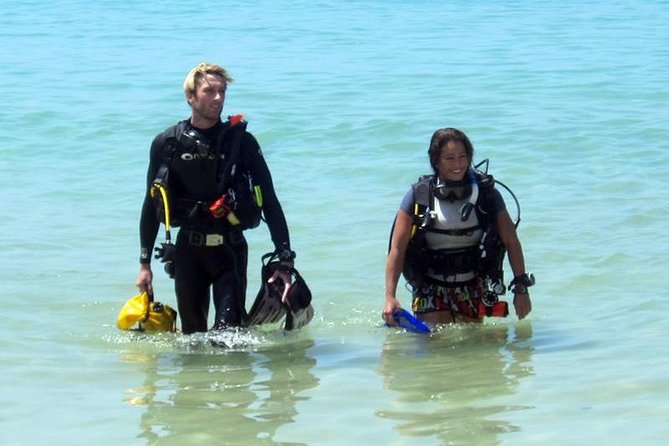
Phuket has a way of making training feel like an escape. This 3-day Open Water scuba certification course pairs upfront e-learning with hands-on beach-based training sessions and a calm, step-by-step instructor, Charles. I especially liked how the plan stays structured, so you know what’s coming next, and how Charles makes the safety skills feel practical instead of scary.
One possible drawback: this course leans on good ocean conditions. If weather doesn’t cooperate, expect a reschedule or refund offer, and you’ll want to be flexible with your Phuket days.
In This Review
- Key things I’d focus on before you book
- Phuket’s 3-day Open Water scuba certification: why it’s a good fit
- A realistic word on your comfort level
- Your course flow: e-learning, pool skills, then beach training sessions
- Day 1: classroom review, gear fitting, pool training
- Day 2: beach training sessions 1 and 2
- Day 3: beach training sessions 3 and 4, plus completion
- Meeting Charles and getting real instructor confidence
- Private-feeling, not crowded
- The skills you’ll practice (and what they mean for safety)
- Why the “why” lessons are worth it
- Marine life in Phuket: what you can realistically hope to see
- Price and value: is $503 a fair deal?
- Who should book this course, and who should pause first
- Good match
- Extra care needed
- Practical planning notes for Phuket weather and your schedule
- Should you book Kiwidivers Phuket for Open Water scuba certification?
- FAQ
- What is included in this 3-day Open Water scuba certification course?
- Where does the course start?
- How long is the course?
- How many people are in the group?
- Do I need to complete e-learning before arriving?
- What are the age and supervision requirements?
- Are there health requirements before diving?
- Is it safe to dive if I recently flew?
- What happens if weather is bad in Phuket?
- How does confirmation work after I book?
Key things I’d focus on before you book
- E-learning first, then in-person skill checks so Day 1 is mostly paperwork review, fitting gear, and pool training
- Small group size (max 4) which means more instructor attention during the practice parts
- Charles-led, very professional coaching with lots of explanation of the why, not just the what
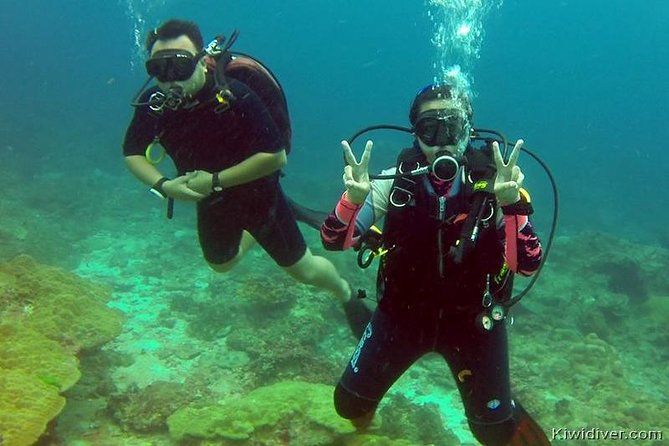
- Four real-world training sessions on the beach across Day 2 and Day 3
- You finish with a logbook and certification once you pass the course requirements
- Weather matters since the open-water training depends on conditions
More reef stops, snorkel spots and dive sites near Phuket
- Phuket: 3 Khai Islands Relax & Snorkeling Half/Full Day Tour★ 4.2 · 2,379 reviews
- From Phuket: Similan Islands Snorkeling Trip by Speedboat★ 4.4 · 1,579 reviews
- Phi Phi & Bamboo Islands Snorkeling Tour with Lunch by Speedboat★ 5.0 · 797 reviews
- Phi Phi and Khai Islands Snorkeling Tour with Lunch by Speedboat★ 4.5 · 788 reviews
Phuket’s 3-day Open Water scuba certification: why it’s a good fit
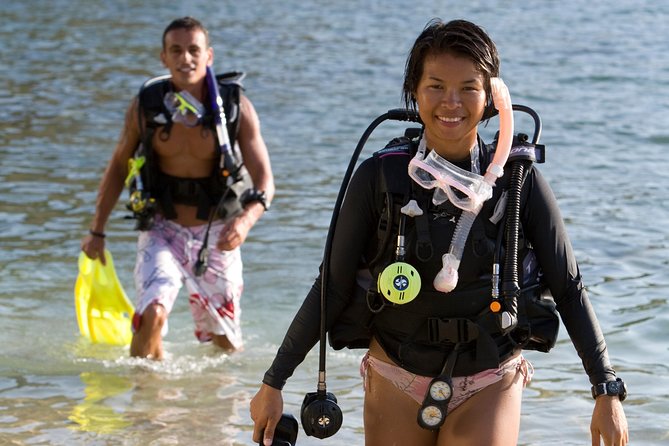
If you’ve ever wanted a scuba credential without the chaos of a big tour group, this setup makes sense. You’re training in Phuket, a place where the ocean life is easy to picture and the beach environment can be ideal for learning the basics safely. The schedule is designed around progression: learn the concepts first, build muscle memory in a pool, then apply it in open water.
I also like that this course follows a worldwide training standard for open water safety. That matters because scuba shouldn’t be a trial-by-fire thing. You’re getting the required knowledge elements ahead of time, then meeting your instructor to tighten up anything you didn’t fully absorb.
The other big plus is the instructor style. Charles is described as highly experienced, with deep teaching background, and he’s known for being organized and professional. More than one person notes that he explains the why behind skills and uses real-life scenarios so safety feels like it connects to actual ocean situations. That kind of clarity helps your confidence grow in the right direction.
A realistic word on your comfort level
You don’t need to be an athlete. You do need reasonable fitness and to be comfortable in the water. The course also screens for medical concerns via a health questionnaire, and you’ll need to meet the stated requirements (age, no medical conditions that would prevent diving). If any of that is a question for you, it’s worth confirming before you commit.
Your course flow: e-learning, pool skills, then beach training sessions
This is a 3-day course with a 9:00 am start at Kiwidivers Phuket (20 Soi Lam Sai, Tambon Karon, Amphoe Mueang Phuket, Chang Wat Phuket 83100). The course ends back at the meeting point.
Here’s what the days actually look like, and why each step matters.
Day 1: classroom review, gear fitting, pool training
Before you arrive, you complete the e-learning so the educational content is already done. On Day 1 you meet the instructor to go through paperwork, review the training materials, and reinforce anything you need to strengthen.
Then you get fitted for scuba equipment. That part sounds small, but it’s huge for comfort. If your gear fit is off, your whole day feels harder than it should.
After the fitting, you do pool training. This is where you learn the mechanics in a controlled space. You practice key safety skills, equipment handling, and the basic flow of what you’ll do during open water sessions—without the extra variables that come with the ocean.
A few more things to do around Phuket worth comparing



Day 2: beach training sessions 1 and 2
On Day 2 you meet at the beach for training dives/sessions 1 and 2 (the course is structured as two open-water training blocks on Day 2). This is where your pool practice gets tested against reality: water movement, natural light changes, buoyancy adjustments, and the simple fact that the ocean doesn’t behave like a pool.
The instructor guides you through everything, which helps you focus on doing it correctly rather than guessing. You’ll get used to the sequence of checks and the feel of being properly set with your gear.
Day 3: beach training sessions 3 and 4, plus completion
Day 3 is your final training with two more open-water sessions. By now, the goal is not just passing tasks—it’s making the basics feel steady under mild pressure. You should be more relaxed than Day 2, because you’ve already gone through the learning curve.
Upon successful completion, you receive your logbook and your Open Water scuba certification. That means you leave with a document trail you can use for future travel and advanced training.
Meeting Charles and getting real instructor confidence
A big reason this course gets consistently high marks is the instructor approach. Charles is repeatedly described as experienced, professional, and very organized. One review highlights that he has been an instructor since 2000, and another notes his confidence with long-term experience.
What I think matters most for you is how he teaches.
- He doesn’t just run procedures. He talks through why techniques work and how to apply them in real situations.
- He makes people feel comfortable while still keeping training structured and focused.
- He’s responsive and reliable, with a plan that doesn’t feel chaotic.
That combination is especially helpful if you’re anxious about the unknown. A calm instructor doesn’t mean you skip fundamentals. It means you’re more likely to learn them correctly the first time.
Private-feeling, not crowded
The experience is set up for a maximum of 4 travelers. In practical terms, that means your practice time doesn’t get diluted by a large group. Scuba skills require repetition, and repetition is easier when you have an instructor nearby and not across a crowd.
The skills you’ll practice (and what they mean for safety)
Even without a giant list in front of you, the structure tells you what this course is designed to test: knowledge, equipment competence, and safe behavior in open water.
Day 1’s pool work is typically where you master the fundamentals that keep you calm later. That usually includes:
- equipment handling so you’re not fighting your gear
- safety checks and controlled breathing habits
- basic buoyancy control so you’re not bouncing or floating wildly
Then Days 2 and 3 transfer those skills to beach conditions. That’s important because open water adds variables. You can know a skill perfectly in a pool and still feel weird in the ocean. This course is basically designed to close that gap.
Why the “why” lessons are worth it
More than one review points to Charles explaining the why of techniques and safety skills. That style matters because scuba isn’t just memorizing steps. If you understand the logic, you’re better at recovering when something changes. You’re also better at learning faster—because your brain is building a model, not just a checklist.
Marine life in Phuket: what you can realistically hope to see
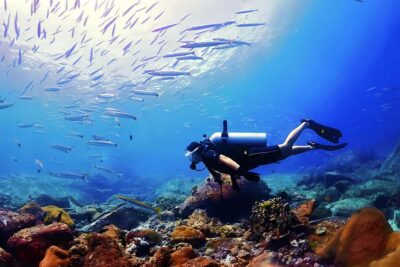
The course is first and foremost a training program, not a marine safari. Still, Phuket’s ocean life is a major reason many people sign up. The course overview promises ample opportunities to see exciting marine life in their natural environment, and at least one review calls out how fabulous the marine life was.
What you can count on:
- you’ll be doing open-water sessions in a tropical area
- you’ll have time underwater as part of the learning process
- you’ll likely see wildlife, but specific animals can’t be guaranteed
My advice: treat marine life as a bonus to your training. Focus on air management, buoyancy, and staying calm. When you nail those, you’ll actually notice what’s around you instead of rushing through the experience.
Price and value: is $503 a fair deal?
At $503 for about 3 days, you’re paying for a full certification course structure: e-learning, instructor time, equipment fitting, pool training, and four open-water training sessions. You’re also paying for the safety layer that comes from practiced coaching in a small group.
Here’s how I’d judge value beyond the dollar amount:
- You’re not just buying time in the water. You’re buying the training progression, gear fitting, and assessment required for completion.
- Group size is capped at 4, which usually means fewer compromises on attention.
- You leave with a logbook and certification, meaning you’re not starting from scratch if you want to keep going later.
Could this be more expensive elsewhere? Maybe. Could it be cheaper? Also possible. But for a course that’s structured and instructor-led, $503 can be reasonable—especially if you would otherwise pay separately for instruction, pool training, and open-water practice.
Who should book this course, and who should pause first
This isn’t for everyone, and the course requirements are clear about that.
Good match
You’ll probably enjoy this most if you:
- are over 10 years old
- have a reasonable fitness level
- are comfortable in the water
- are willing to do the e-learning before Day 1
Solo adult travelers and couples can be a good fit. One review even mentions doing the course as a parent-and-child team, with confidence built through clear instruction.
Extra care needed
You should think twice (or confirm with a doctor) if:
- you have medical conditions that could prevent safe diving
- you’re unsure how your health lines up with the health questionnaire
- you’re dealing with anxiety about being in open water and might need extra patience
Also, diving within 24 hours of flying is not recommended. If you’re flying in and immediately trying to train, give yourself time to adjust.
Practical planning notes for Phuket weather and your schedule
This experience requires good weather. That’s not just a fine print thing—it’s a core part of how your course can proceed. If conditions are poor, you’ll be offered a different date or a full refund.
So when you’re planning Phuket, treat the course days as important blocks, not something to stack right between a late night flight and a half-day island tour.
Also keep in mind the pace: the training runs across three full days (starting at 9:00 am). If you like a relaxed itinerary with room for spontaneity, plan other activities outside the training windows.
Should you book Kiwidivers Phuket for Open Water scuba certification?
Yes—if you want a structured course, small group attention, and an instructor who explains the why behind safety skills. The big selling points for me are the clear progression (e-learning → pool → beach), the small group cap of 4, and Charles’s teaching reputation for being organized, professional, and confidence-building.
You might skip it if you know your schedule can’t flex around weather. Open-water training depends on conditions, and Phuket can throw rainy or rough days at you.
My final take: if you’re ready to do the work before you go (e-learning) and you want a calm, well-led path to certification, this is a smart way to start your scuba journey.
FAQ
What is included in this 3-day Open Water scuba certification course?
You complete e-learning in advance, then meet your instructor on Day 1 for paperwork review, gear fitting, and pool training. Days 2 and 3 include beach training sessions (two on Day 2 and two on Day 3). After successful completion, you receive a logbook and your Open Water scuba certification.
Where does the course start?
The course starts at Kiwidivers Phuket, 20 Soi Lam Sai, Tambon Karon, Amphoe Mueang Phuket, Chang Wat Phuket 83100, Thailand, starting at 9:00 am. It ends back at the same meeting point.
How long is the course?
It runs for 3 days approximately.
How many people are in the group?
The maximum group size is 4 travelers.
Do I need to complete e-learning before arriving?
Yes. The educational elements are completed in advance through e-learning.
What are the age and supervision requirements?
You must be over 10 years of age. All children under 18 must be supervised by a parent, and the parent must join this scuba diving activity.
Are there health requirements before diving?
Yes. You must complete a health questionnaire prior to diving. Some medical conditions (for example asthma or heart conditions) may prevent you from diving, and you should consult your doctor.
Is it safe to dive if I recently flew?
Diving within 24 hours of flying is not recommended.
What happens if weather is bad in Phuket?
The experience requires good weather. If it’s canceled due to poor weather, you’ll be offered a different date or a full refund.
How does confirmation work after I book?
Confirmation is received within 48 hours of booking, subject to availability. The tour also uses a mobile ticket.
More Scuba Diving in Phuket
More Tour Reviews in Phuket

Under the Andaman, More Reefs



Keep exploring Phuket and the Andaman coast

Phuket Snorkeling & Diving, compared.
 ★ 4.23 Khai Islands Relax & Snorkeling Half/Full Day TourFrom $242,379 reviews
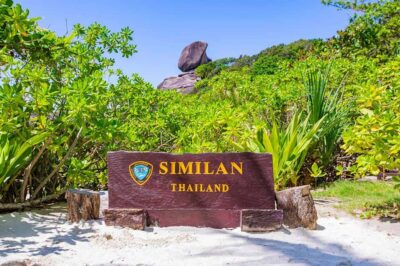 ★ 4.4Similan Islands Snorkeling Trip by SpeedboatFrom $981,579 reviews
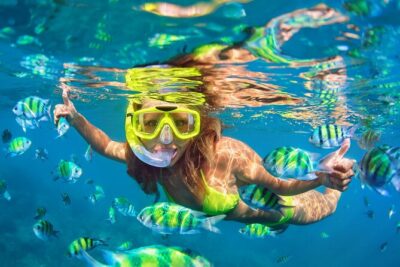 ★ 5.0Phi Phi & Bamboo Islands Snorkeling Tour with Lunch by SpeedboatFrom $129797 reviews
 ★ 4.5Phi Phi and Khai Islands Snorkeling Tour with Lunch by SpeedboatFrom $94788 reviews
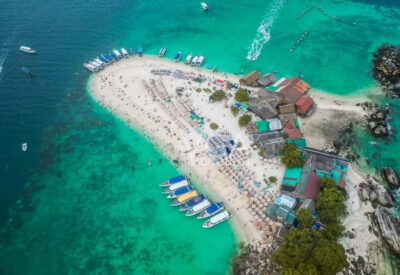 ★ 4.23 Khai Islands Tour- Snorkel & Relax (Half/Full Day)From $30502 reviews
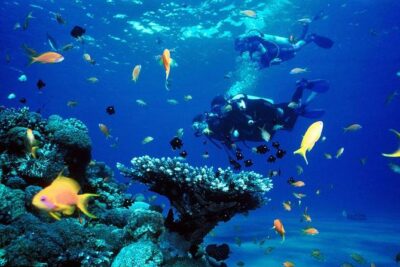 ★ 5.0Full-Day Beginner Scuba Course with Private Tuition, Racha YaiFrom $162368 reviews
 ★ 4.5Best of Phi Phi Islands Snorkeling Tour from PhuketFrom $75317 reviews
 ★ 4.8Scuba Diving Maithon Or Racha Islands For All LevelsFrom $100245 reviews
Browse the lists this tour appears in