
Reviewed · BIG BUDDHA, TEMPLES & OLD TOWN
Private Morning Сeremony in Wat Chalong (Chaithararam Temple)
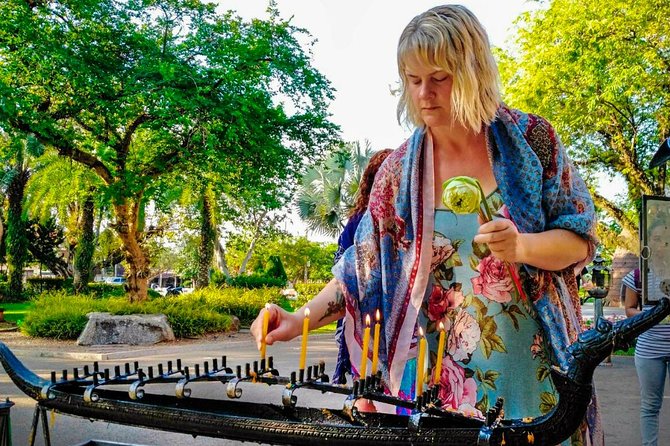
Start your Phuket day with a real ritual. This Wat Chalong morning ceremony gives you hands-on monk-feeding and Buddhist fortune telling early, before the day heats up. I love how the guide keeps it respectful and practical, and I love the small-group feel where you can actually ask questions. One thing to consider: this is still a working temple, so if you want total solitude, you might notice other visitors around the grounds.
On my advice list for Phuket, this one is a top pick because it’s led by a local guide known for clear English and patience. In recent sessions, guides like Sunsanee (sometimes spelled Sunsansee) are called out for taking time to explain each step and answer questions without rushing.
Finally, you’ll be doing real ceremonial tasks, not just watching from the sidelines. If you’re hoping for a purely storytelling or lecture-style experience, go in ready to participate.
In This Review
- Key things to know before you go
- Wat Chalong at 7:00am: why this morning works
- The monk-feeding ceremony: what you’ll actually do
- Siamsi fortune telling at Wat Chalong: how to think about it
- The short temple tour and Thai Buddhism context
- What’s included: the ceremony materials (and the fish part)
- Price and value: is $54.31 worth it?
- Group size and “private” expectations
- Getting the most out of your ceremony
- Who should book this Wat Chalong morning ceremony
- Should you book this Wat Chalong morning ceremony?
- FAQ
- How long is the private morning ceremony at Wat Chalong?
- Where does the experience start, and what time?
- Is this a private tour or a small group?
- What’s included in the ceremony materials?
- Do I need to bring anything for photos?
- What happens if the weather is bad?
Key things to know before you go
- Small group energy: private group up to four people, with the overall activity capped at 10 travelers.
- Monk-feeding with provided food: you bring the offering as part of the morning ritual.
- Siamsi fortune telling: you’ll get a prediction using traditional Buddhist sticks.
- More than one moment at the temple: you get a short guided loop for context about Thai Buddhism.
- All the ceremony tools are handled: flowers, candles, a sarong, and live fish are included.
- Meet early at 7:00am: timing matters for a calmer start at Wat Chalong.
More around Big Buddha, Wat Chalong and the Old Town shophouses
- Phuket: Wat Chalong, Viewpoint, and Old Town Guided Tour★ 4.5 · 1,875 reviews
- Phuket City Tour with Wat Chalong, Big Buddha & Famous Viewpoints★ 4.5 · 1,285 reviews
- Travstore Original Phuket Discovery Tour – Shared Half Day City Tour★ 4.5 · 1,103 reviews
- Phuket: Half-Day City Highlights and Viewpoints Group Tour★ 4.5 · 719 reviews
Wat Chalong at 7:00am: why this morning works
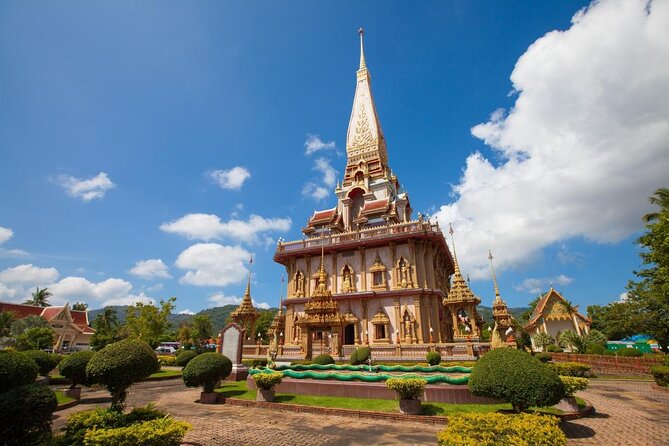
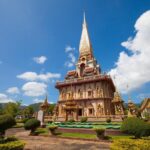
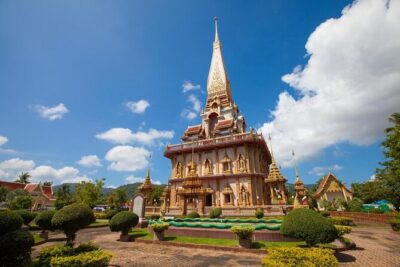
Wat Chalong (Chaithararam Temple, also called Chao Phraya Temple in common speech) is Phuket’s best-known temple for a reason. It’s famous, yes. But what makes this experience worth your time is the timing and the guidance. Starting at 7:00am keeps the mood more peaceful than later in the day, and it lets you focus on the ritual rather than fighting crowds.
The meeting point is right at Wat Chalong, and the session runs about 1 hour 30 minutes. That length is important. You’re not signing up for a half-day temple marathon. Instead, you get a concentrated, step-by-step ceremony sequence plus a short explanation walk.
Another reason I like this format: it doesn’t leave you guessing what matters. The guide explains what’s happening and then walks you through doing it the right way—lotus flowers, candles, and incense are part of the ritual flow, and the guide’s role is to make sure you’re not just copying gestures blindly.
The monk-feeding ceremony: what you’ll actually do
The first part centers on bringing food to the monks. You don’t show up empty-handed. The guide provides what you need, including the offering setup—plus flowers and candles used for the ceremony.
Here’s the practical value: in many Thai communities, morning food offerings are a real daily practice. Doing it with local guidance helps you understand it as something lived, not a staged photo moment. And since food is handled by the guide (with your participation), you can focus on respectful behavior and timing rather than logistics.
You’ll also be given a sarong (a traditional covered-up cloth). That matters because temples expect visitors to dress appropriately. You won’t need to guess what to wear—you’ll be sorted for the ritual.
Photo tip: bring your phone. The activity notes explicitly call out using your smartphone with a camera to capture the moments you’ll want later. That’s a big deal because some parts are quick, and you’ll learn what each action means right as you do it.
Siamsi fortune telling at Wat Chalong: how to think about it
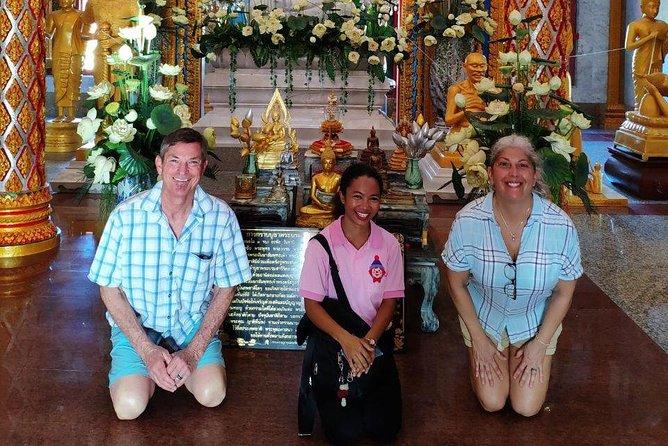
After the food offering, the experience moves into siamsi fortune telling. This takes about 15 minutes and happens at a named point within the Wat Chalong complex: Phiphitthaphan Rup Muean Chao-athikan Wat Chalong.
In plain terms, siamsi sticks are used traditionally to predict the future. The point isn’t whether you treat it as science. The point is you get to witness how Thai Buddhists use ritual tools to ask questions and interpret answers. The guide explains the process and what it’s meant to do for the person seeking guidance.
A good way to approach this: go curious, not skeptical. Ask what kind of questions people usually bring into the ritual, and listen to the explanations. If you want something more “spiritual” in the modern sense, keep your mind open. One review noted that the temple area can feel busy, which can shift the mood you’re expecting—but that same reality also makes the ritual feel authentic, because it’s happening in a real place with real people.
Also, because it’s fortune telling, it’s personal. You’ll get a prediction as part of the experience, and you can use it however you like: as a fun prompt for reflection, or as meaningful ritual insight.
The short temple tour and Thai Buddhism context
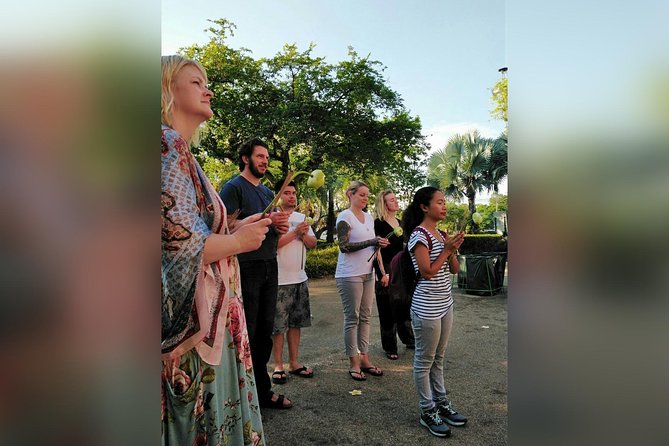
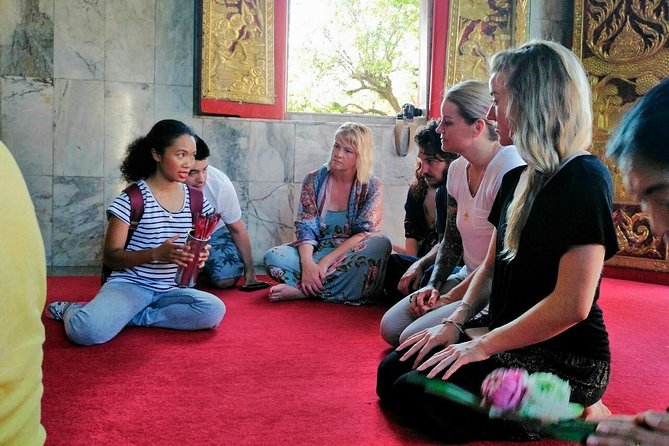
Next, you get a brief guided circuit around the temple area, at Khet Aphaiyathan. This also lasts about 15 minutes and is framed as a small excursion about Thai Buddhism.
What I like here is the balance. You’re not just doing one ritual and leaving. You also get context—where things are in the space and what they connect to in belief and practice. You’ll hear stories from a guide who comes from a traditional Thai family, which helps the explanations feel less like memorized facts and more like lived knowledge passed down.
This part is where you can get the most value if you’re chatty. If you’ve got questions like why certain rituals happen in the morning, or how monks fit into daily Thai life, this is your moment. The format is short, but it’s designed for conversation rather than a rigid script.
One practical note: the temple grounds are active. So even though you start early, don’t expect a silent museum feel. If you’re the type who gets distracted by noise, you’ll still probably be fine—you’re busy moving through the ceremony steps—but it’s good to know what you’re walking into.
A few more things to do around Phuket worth comparing




What’s included: the ceremony materials (and the fish part)
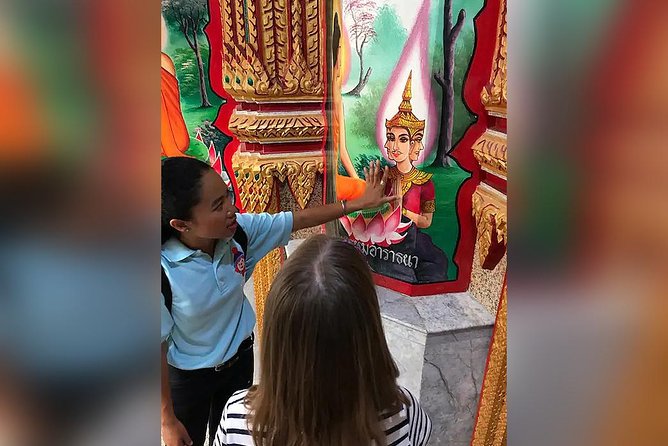
The included items cover the stuff you’d otherwise need to sort out yourself:
- Flowers and candles for the ceremony
- Food offering to the monk
- A sarong for covered-up comfort during the ritual
- Live fish for the final ceremony (you choose the type of fish based on the blessing you want)
That last one is the most unique detail. The experience includes live fish for the final ceremony, and you choose the fish type depending on the blessing you’re seeking. The guide will help you navigate what that means, but you should know it’s not metaphorical. This is part of the real ritual sequence.
So what’s the practical takeaway? This tour is built so you don’t arrive unprepared. The biggest “work” you do is participating respectfully and listening. Everything else—ceremony tools and offering materials—is handled as part of the experience plan.
Price and value: is $54.31 worth it?
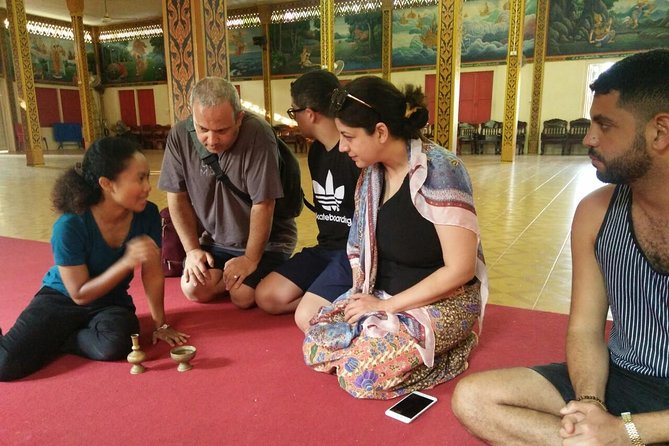
At $54.31 per person, this is not the cheapest way to see Wat Chalong. But it also isn’t trying to be. You’re paying for three things that are hard to replicate on your own:
First, local guidance. The guide explains what’s going on and helps you do the ritual steps without confusion. At a busy temple, that guidance can be the difference between a meaningful experience and a blur of incense and photos.
Second, participation. Monk-feeding, siamsi fortune telling, and the ritual materials are included. If you DIY Wat Chalong, you’d likely do basic visiting, but you wouldn’t automatically get the structured, step-by-step “you can participate like a local” format.
Third, the small-group setup. Private group up to four people, plus a cap on overall travelers. That means you aren’t stuck behind a crowd that turns the ceremony into background noise.
If you’re the kind of traveler who likes to understand culture through action—not just observation—this price is in the reasonable zone. If you only want sightseeing photos, you can probably do the temple visit more cheaply on your own. But for a guided, hands-on morning ritual, the value is solid.
Group size and “private” expectations
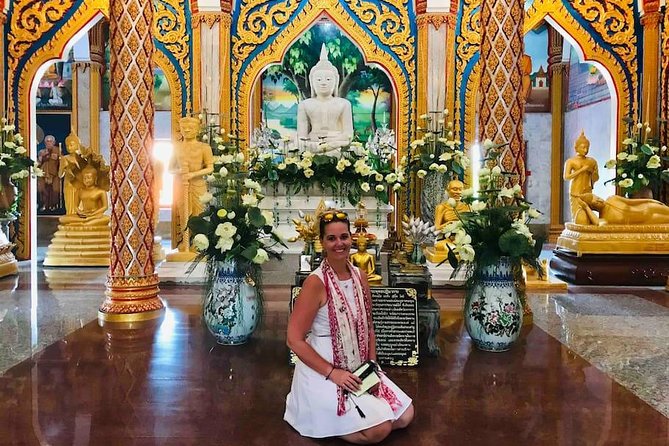
This experience is designed as a small private morning ceremony. It says the private group is maximum four people, and it also lists the overall activity cap as 10 travelers.
What this means in real life: you should expect a calmer pace than standard group tours. You’ll have more room to ask questions, and you’ll be able to follow the ceremony steps without constant shoulder-to-shoulder crowding.
One more benefit of the small size: it supports a respectful atmosphere. Rituals go better when people aren’t rushing. And it’s easier for the guide to correct your form, timing, or attention if you’re doing something specific—especially during fortune telling and the offering sequence.
Getting the most out of your ceremony
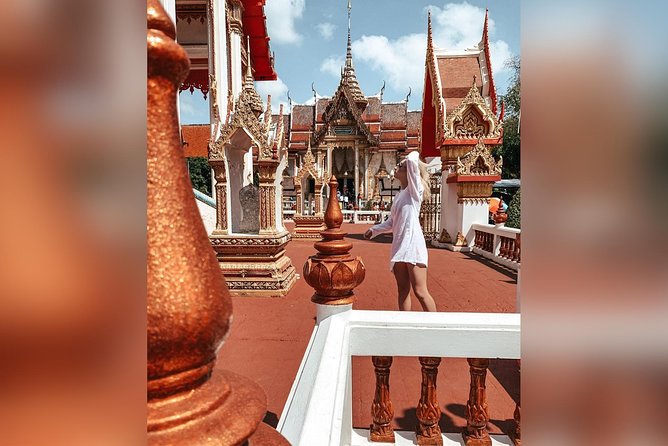
Here are a few ways to make sure your morning feels personal and not just scheduled:
- Ask one question early. During the explanation, pick one thing you genuinely want to understand—then keep going.
- Participate with your whole attention. If you treat the offering like a checkbox, you’ll miss the meaning. If you slow down, the ritual becomes a real connection point.
- Use your smartphone wisely. The notes call out taking your own camera phone, and it’s a good reminder: shoot a few moments, then look up and watch the guide’s cues.
- Plan for a public temple. Even early, Wat Chalong is visited by people. If you came hoping for total silence, adjust expectations and focus on the ceremony sequence.
And if you’re sensitive after a family loss or you’re traveling with a heart that needs quiet space, this type of ritual can land differently. One review described it as renewing and blessed. You don’t have to force spirituality, but it can be a gentle morning reset.
Who should book this Wat Chalong morning ceremony
This tour fits best if you:
- want a local-led temple morning rather than a self-guided walkthrough
- like learning through participation—especially with monks and ritual tools
- enjoy Buddhist context from someone who grew up around it
- want a small-group experience with time to ask questions
It’s less ideal if you:
- only want sightseeing and photos
- dislike active participation and prefer watching from a distance
- need guaranteed solitude (the temple is still a living, public place)
Also, it’s a good fit for couples and families because the ritual is structured. In one review, a family with kids (ages 11 and 15) said they stayed engaged. That’s a clue: if you bring a curious, open attitude, the experience can work across ages.
Should you book this Wat Chalong morning ceremony?
I’d book it if you want your Phuket day to start with something real and respectful, and if you like the idea of doing a ritual you can’t really fake on your own. The combination of monk-feeding, siamsi fortune telling, and a guided temple context walk is a strong “culture in motion” package, especially for the morning timing.
Book it sooner if you want the small-group feel, since private experiences can go quickly. And if you’re picky about atmosphere, come ready for some movement in the temple environment—then lean into what you came for: the ceremony steps and the explanations.
If you’ve got flexible mornings and you want to feel Phuket beyond beaches, this is one of the best ways to do it.
FAQ
How long is the private morning ceremony at Wat Chalong?
It runs for about 1 hour 30 minutes.
Where does the experience start, and what time?
The meeting point is Wat Chalong (Chaithararam Temple), and the start time is 7:00am.
Is this a private tour or a small group?
It’s a small private group with a maximum of four people, and the overall activity is capped at a maximum of 10 travelers.
What’s included in the ceremony materials?
Flowers and candles for the ceremony, a sarong, food offering to the monk, and live fish for the final ceremony are included.
Do I need to bring anything for photos?
Yes. The notes recommend you take your own smartphone with a camera if you want to take pictures.
What happens if the weather is bad?
The experience requires good weather. If it’s canceled due to poor weather, you’ll be offered a different date or a full refund.
More Private in Phuket
More Tour Reviews in Phuket






Big Buddha & Old Town, More

Keep exploring Phuket and the Andaman coast




Big Buddha, Temples & Old Town, compared.
 ★ 4.5Full Day City Tour with Night MarketFrom $312,888 reviews
 ★ 4.7Guided Tour of Phuket City with Hotel TransfersFrom $382,527 reviews
 ★ 4.5Wat Chalong, Viewpoint, and Old Town Guided TourFrom $551,875 reviews
 ★ 4.5Phuket City Tour with Wat Chalong, Big Buddha & Famous ViewpointsFrom $271,285 reviews
 ★ 4.5Travstore Original Phuket Discovery Tour – Shared Half Day City TourFrom $211,103 reviews
 ★ 4.5Half-Day City Highlights and Viewpoints Group TourFrom $45719 reviews
 ★ 4.8Private City Tour &Driver –Customize Your HighlightsFrom $39636 reviews
 ★ 4.5Phuket City Tour – Old Town, Local Food, Temple & ViewpointFrom $48525 reviews
Browse the lists this tour appears in