
Reviewed · ETHICAL ELEPHANT ENCOUNTERS
Phuket – Blue Elephant Thai Cooking Class with Market Tour
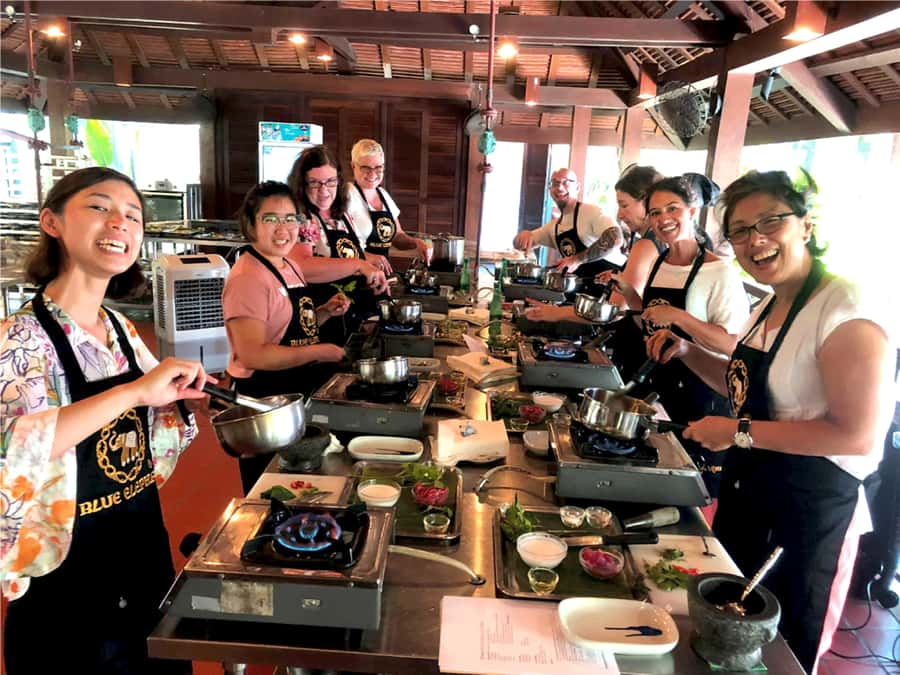
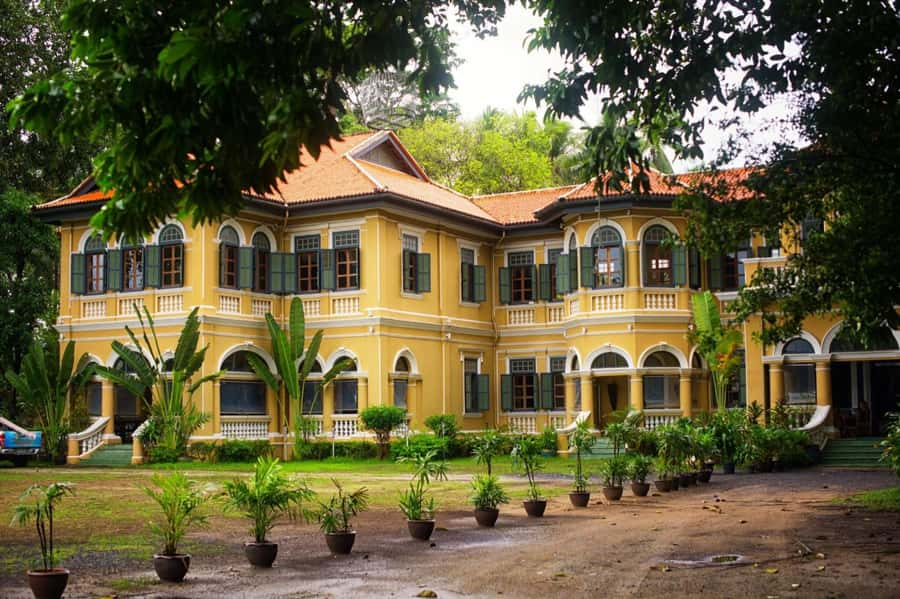
Thai cooking gets real at Blue Elephant. The day starts at Governor’s Mansion with a market tour, then shifts into a small-group cooking class taught by chefs like Chef Molly or Chef Paul, focused on making Thai flavors you can actually recreate.
I especially like the practical setup—your own cooking space, a wok, and clear instruction for a four-course meal. One thing to think about: there’s no hotel pickup, so you’ll need to get yourself to Blue Elephant Phuket Restaurant & Cooking School and arrive about 15 minutes early.
In This Review
- Key things to know before you go
- Governor’s Mansion Morning: Market Tour Then Theory
- Four-Course Cooking: Your Wok, Your Workspace, Real Technique
- What Makes the Ingredients Part Worth It (Market Tour, Not Just Photos)
- Lunch at Blue Elephant Restaurant: Eat What You Cook
- Price and Value: What $174 Buys You in Real Terms
- Small Group Dynamics: Why Up to 10 People Matters
- Possible Downsides: Spice Levels and Getting There
- Who This Phuket Class Is Best For
- Should You Book This Phuket Market + Cooking Class?
- FAQ
- FAQ
- Where do I meet for the Blue Elephant Thai Cooking Class and Market Tour?
- How long is the cooking class and market tour?
- Is hotel pickup or drop-off included?
- What’s included with the tour price?
- How many dishes will I cook?
- Is it a small group?
- What languages are available during the tour?
- Does the menu change by day?
- What’s the cancellation policy?
- Can I reserve and pay later?
Key things to know before you go
- Small-group learning (up to 10 people) means you’re not lost in a crowd when questions pop up.
- Market tour first so you understand what you’re buying and why Thai cooking uses it.
- 4-course hands-on cooking with a starter, soup, main, and accompanying dish.
- Take-home recipe cards plus a certificate, so your notes aren’t limited to memory.
- Lunch is included and you get to eat what you made at the Blue Elephant Restaurant.
Other ethical sanctuaries where you meet the herd, not ride it
- Phuket: Elephant Experience with Lunch or Dinner and Pickup★ 4.7 · 1,387 reviews
- Phuket: Bukit Elephant Park Sanctuary Walk and Feed Tour★ 4.9 · 926 reviews
- Phuket: Phuket Elephant Care Sanctuary ECO Tour★ 4.9 · 671 reviews
- Phuket: Half Day or 2-Hour Ethical Elephant Care Sanctuary★ 4.5 · 481 reviews
Governor’s Mansion Morning: Market Tour Then Theory
This experience has a smart rhythm: you learn ingredients before you start chopping, which makes everything that follows feel more logical (and easier to repeat later). You meet on your own at Blue Elephant Phuket Restaurant & Cooking School, arriving about 15 minutes before departure time so you can settle in.
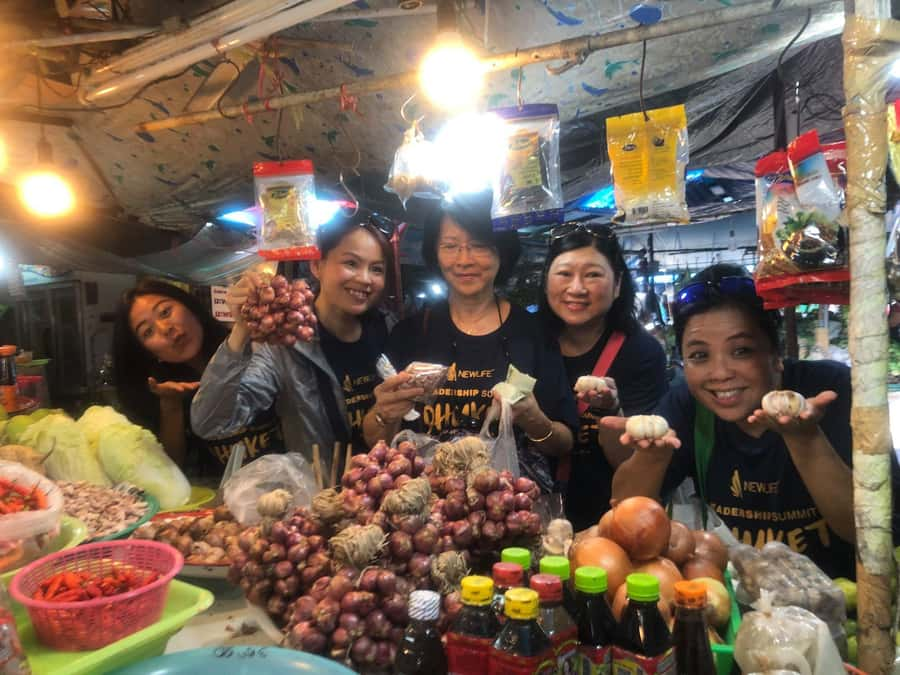
You begin with a refreshing welcome at the Blue Elephant Bar. From there, you head out for a local morning market visit—your guide walks you through common Thai ingredients such as fruits, vegetables, and spices. What I like about this part is the focus on use, not just sightseeing. You’re not only looking at products; you’re hearing how Thai cuisine builds flavor, often from the same handful of ingredients used in different ways.
Back at the cooking school, there’s a Thai herbal drink and a cool towel before the class moves into theory. This is where the “how” starts to click: you learn the methods behind putting together a classic Thai meal, then you move straight into practice. It’s a good balance for both beginners and people who already cook—beginner-friendly because it’s structured, but not boring if you know your way around a kitchen.
Menu changes by day, so what you cook depends on your weekday. For example:
- Monday includes papaya salad, a spicy & sour prawn soup, red curry with beef and pumpkin, and stir-fried rice noodle with prawns.
- Wednesday features coconut milk soup with prawns, green curry with chicken, and grilled sea bass with Thai herbs.
- Sunday leans into dishes like duck spring roll and a yellow curry with prawn and Phuket pineapple.
That daily menu detail matters because you’ll want to pick a day that matches your spice tolerance and seafood/meat preferences.
Four-Course Cooking: Your Wok, Your Workspace, Real Technique
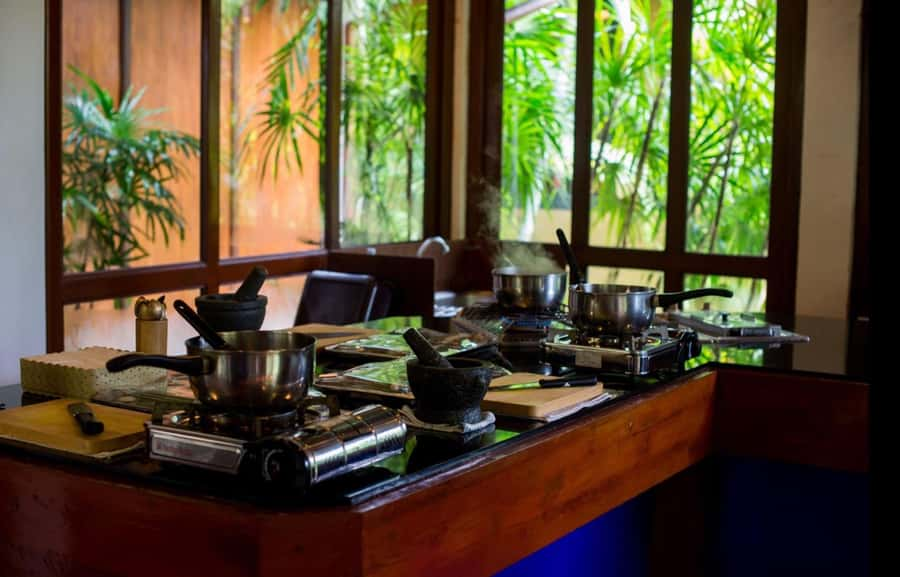
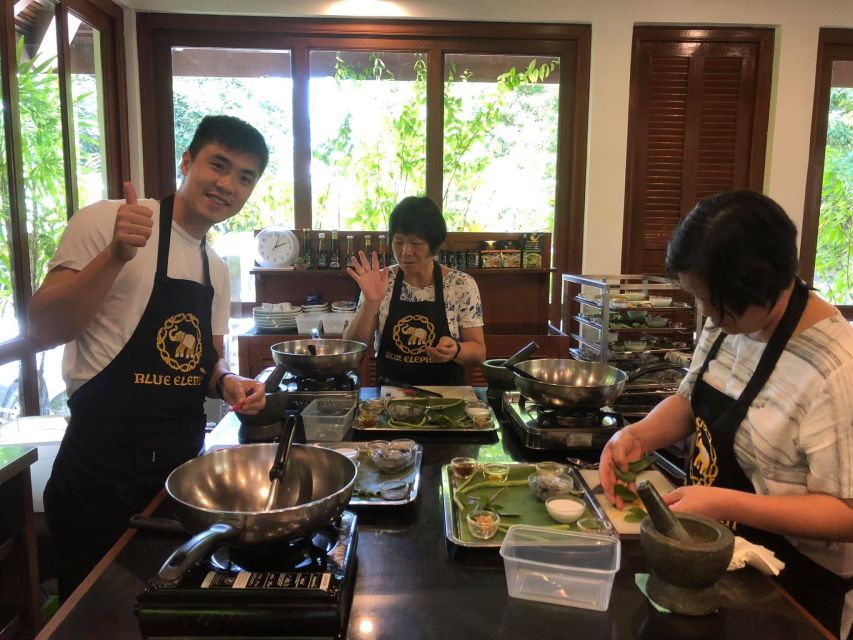
Once you step into the practice room, the experience shifts from listening to doing. You’re given a personal workspace and a wok—exactly the kind of setup that helps you cook without fighting for counter space or guessing what you’re supposed to hold or heat next.
You’ll be guided to prepare a starter, soup, main dish, and an accompanying dish. In other words, you’re not just making one plate and calling it a day. Thai meals are built around contrast—spicy next to sour, creamy curry against a brighter side dish—so cooking four components helps you understand how the meal comes together as a system.
The instruction style is hands-on and supervised. In the standout moments, you’ll see teachers explaining ingredients that might be unfamiliar. One example from what I’ve seen with Chef Molly-style instruction is the attention to what certain ingredients do in the finished dish, not just how to cook them. That makes a big difference if you’ve never shopped Thai markets before—suddenly you know what to look for back home.
Also, the class model is set up so you’re expected to eat the food you make. That sounds obvious, but it changes your focus: you cook with the goal of tasting and adjusting, which usually leads to better learning and fewer “I hope it works” moments.
What Makes the Ingredients Part Worth It (Market Tour, Not Just Photos)
A big part of the value here is the ingredient education. Many cooking classes start with ingredients already laid out. This one sends you to a market first, so you see how Thai cooking actually sources flavor.
During the market visit, your guide points out items you might not know—different vegetables, common spices, and Thai pantry staples that are hard to substitute if you want your results to taste right. It’s also a useful way to learn how Thai cooks think about freshness and texture. Even if you’re not buying everything back home, you’ll carry home a better sense of what each ingredient contributes.
This is also where small group size helps. With a limited group (up to 10 participants), you can ask questions during the market walk instead of waiting until the end. And since you get a Blue Elephant shopping bag and products included, you’re not just learning—you’re also leaving with items you’ve been taught to use.
Lunch at Blue Elephant Restaurant: Eat What You Cook
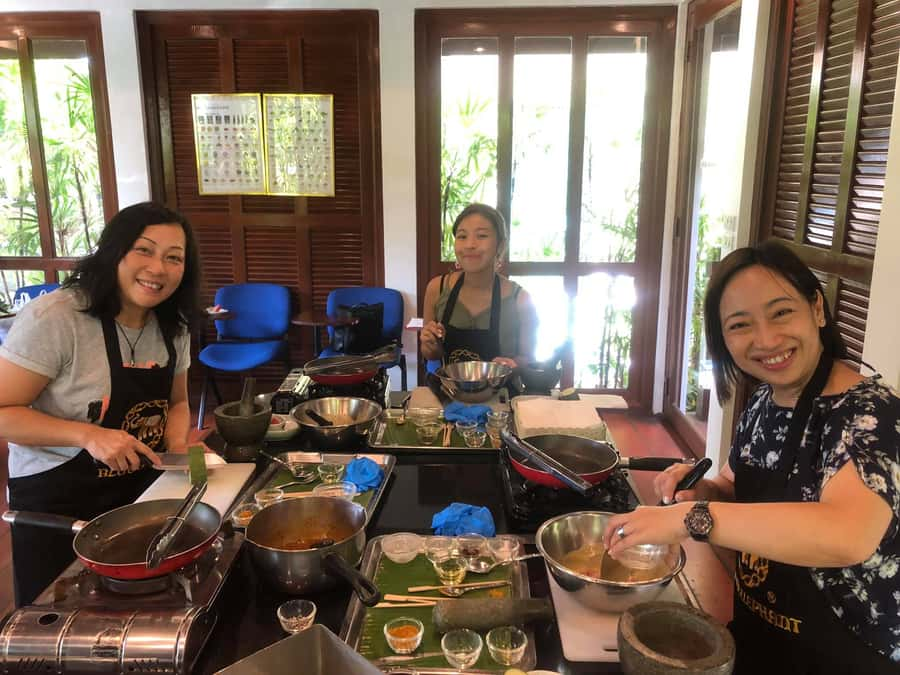
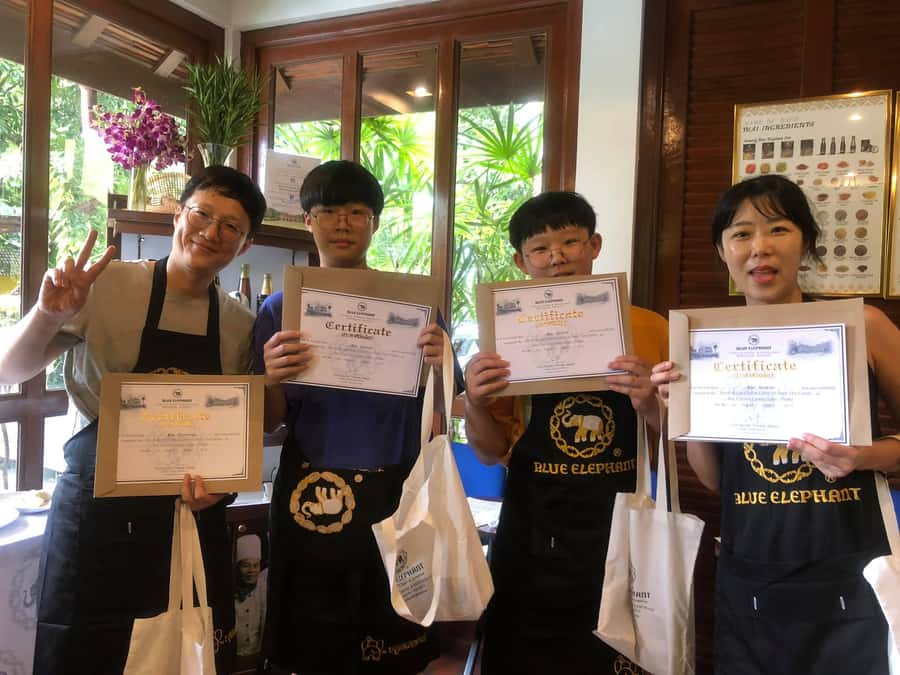
After the cooking sessions, you’ll receive a certificate and a souvenir, then you sit down for lunch at the Blue Elephant Restaurant. This is one of those parts that seems simple, but it’s genuinely satisfying: you taste your own work while it’s still fresh, and you can compare what your dish tastes like versus what you learned in theory.
Lunch at the restaurant also gives you a sense of how your dishes fit into a real meal setting. Thai cooking isn’t only about flavor; it’s about timing, heat levels, and balance across the table. When you eat the full set you cooked, you get a clearer picture of why Thai dishes are often paired the way they are.
One more small detail I appreciate: the meal is included, and it’s not treated like an afterthought. You’re not rushing out to find food afterward—you’re staying in the same experience bubble from start to finish.
More classes to cook a proper Thai curry from scratch



Price and Value: What $174 Buys You in Real Terms
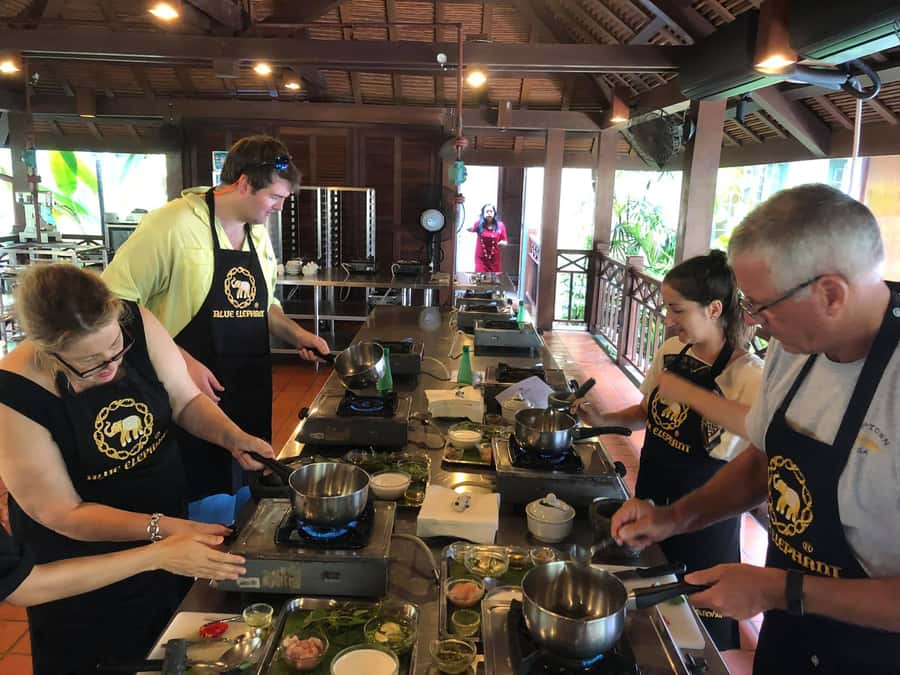
At $174 per person for about 4 hours, this isn’t a budget activity. But it also isn’t a “watch someone cook” class. You’re paying for a structured full experience: market visit, theory, hands-on cooking with supervision, lunch, plus take-home items.
Here’s what that price includes, based on what’s listed:
- All ingredients
- Blue elephant apron
- Certificate
- Shopping bag and products
- Cooking recipes (recipe cards)
- Refreshing towel
- Thai herbal drinks on arrival
What’s not included is hotel pickup and drop-off, so you’ll either need to travel to the meeting point yourself or factor in transport costs. If you’re already staying in Phuket Town or near the restaurant, this can feel very manageable. If you’re farther out and need a taxi both ways, the price can feel steeper.
Still, the day has a clear learning arc and you leave with more than just a meal. Recipe cards and ingredients you learned to use are the kind of extras that often make classes feel worth it later, after you’re home staring at your spice shelf.
Small Group Dynamics: Why Up to 10 People Matters
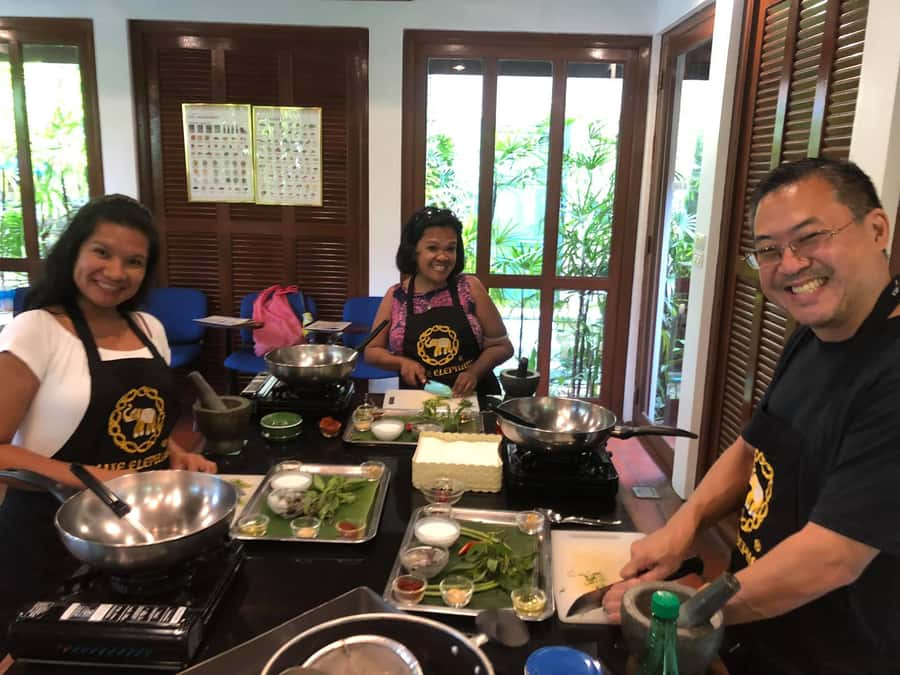
A “small group” limit of 10 sounds like marketing until you feel it in the kitchen. Here, it tends to translate into faster help when something goes wrong—too much heat, a sauce that needs balancing, or confusion about which spice goes where.
It also makes the market portion better. When you’re in a bigger group, market walks become a line you follow. With a smaller group, you can pay attention to the guide’s explanations about ingredients, ask quick questions, and actually remember what you saw.
The class also offers live tour guidance in English and Thai, which helps if you want to double-check terms you didn’t catch the first time.
Possible Downsides: Spice Levels and Getting There
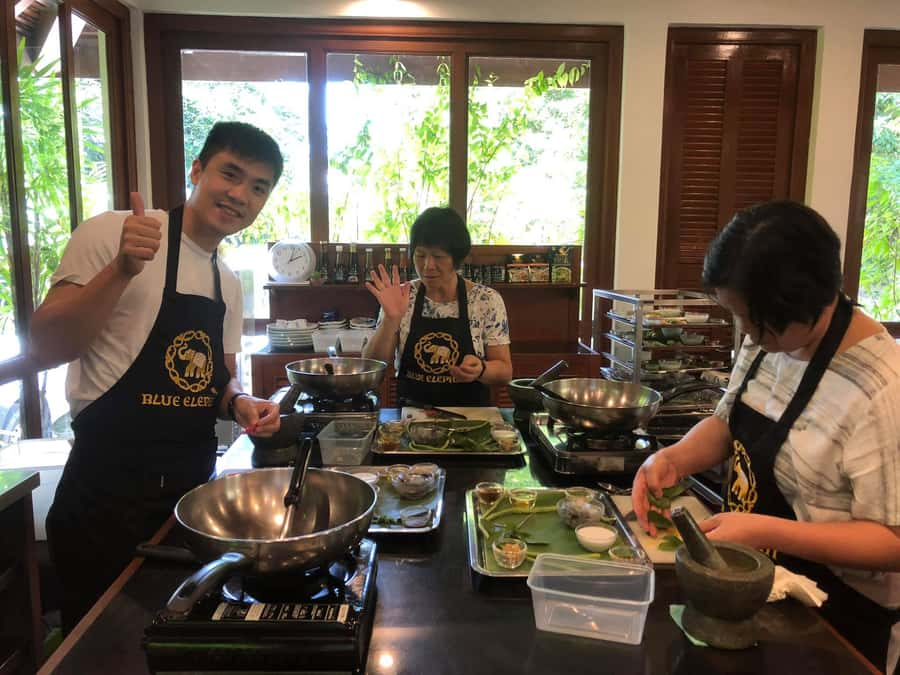
No tour is perfect, so here are the main considerations I’d plan around.
First, Thai cooking often lands on the spicy and sour side, especially with menus that include papaya salad or spicy curry dishes. If you’re sensitive to heat, you’ll want to be ready to tell your instructors how you want your dishes adjusted. The tour data doesn’t specify spice tailoring, but the supervision setup means you can likely communicate.
Second, you’re responsible for transportation to the meeting point. Since hotel pickup and drop-off aren’t included, make sure you can arrive on time at Blue Elephant Phuket Restaurant & Cooking School. This is also why arriving 15 minutes early is smart—you don’t want your day to start with stress.
Finally, like any hands-on group activity, quality can depend on how your own hands and timing work out. I’ve seen examples where one participant’s cooking was off, but instruction and supervision kept things moving. The key point: you’re not left alone.
Who This Phuket Class Is Best For
You’ll likely enjoy this most if you fall into one of these categories:
- You’re a food lover who wants more than tasting—this is about learning methods and ingredients.
- You’re curious about Thai pantry items and want an organized way to learn what they are and how they’re used.
- You want a class that works for beginners but still feels structured enough for experienced cooks.
- You want take-home tools—recipe cards, plus shopping bag items and products.
If you’re only looking for a quick, low-commitment activity, the 4-hour format and the full four-course structure may feel like more than you want.
Should You Book This Phuket Market + Cooking Class?
I think you should book it if you want a guided, high-structure Thai cooking day that teaches ingredients as well as techniques—and then lets you eat your results at a proper restaurant setting. The combination of market tour, supervised hands-on cooking, lunch, and take-home recipe cards is the value engine here.
Skip it or plan carefully if you need hotel pickup, have very limited time in Phuket Town, or know you’re not comfortable with Thai dishes that lean spicy. If those aren’t issues, this is a well-built way to turn Thai cooking from a flavor you like into a set of methods you can reproduce.
FAQ
FAQ
Where do I meet for the Blue Elephant Thai Cooking Class and Market Tour?
You meet at Blue Elephant Phuket Restaurant & Cooking School. You come by yourself and should arrive 15 minutes before departure time.
How long is the cooking class and market tour?
The experience runs for about 4 hours.
Is hotel pickup or drop-off included?
No. Hotel pickup and drop-off are not included.
What’s included with the tour price?
You get all ingredients, a Blue Elephant apron, a certificate, a shopping bag with products, cooking recipe cards, a refreshing towel, and Thai herbal drinks on arrival.
How many dishes will I cook?
The class is designed around a four-course Thai meal. You prepare a starter, a soup, a main dish, and an accompanying dish.
Is it a small group?
Yes. It’s limited to 10 participants.
What languages are available during the tour?
The live tour guide offers English and Thai.
Does the menu change by day?
Yes. The dishes vary by weekday. For example, Monday includes papaya salad and red curry with beef and pumpkin, while Wednesday includes green curry with chicken and grilled sea bass with Thai herbs.
What’s the cancellation policy?
You can cancel up to 24 hours in advance for a full refund.
Can I reserve and pay later?
Yes. You can reserve now and pay later, with an option to keep travel plans flexible.
Phuket Food & Night Markets



More Phuket Cooking Classes
More Time With Phuket's Elephants






Keep exploring Phuket and the Andaman coast



Ethical Elephant Encounters, compared.
 ★ 4.8Elephant Jungle Sanctuary Ethical Feeding ExperienceFrom $284,359 reviews
 ★ 4.8Elephant Sanctuary Guided Tour with Hotel TransfersFrom $412,020 reviews
 ★ 4.9Elephant Jungle Sanctuary Half-Day Visit with MealFrom $901,800 reviews
 ★ 4.8Elephant Save & Care Program TourFrom $831,790 reviews
 ★ 5.0A Morning with the Elephants at Phuket Elephant SanctuaryFrom $971,693 reviews
 ★ 4.8Lily Elephant Half day Trip on the Beach with lunchFrom $831,420 reviews
 ★ 4.7Elephant Experience with Lunch or Dinner and PickupFrom $671,387 reviews
 ★ 4.8Elephant Jungle Sanctuary Feed and Shower TripFrom $611,056 reviews
Browse the lists this tour appears in