
Elephants, but no riding or baths. At Bukit Elephant Park, you get an animal-friendly elephant encounter plus hands-on Thai culture moments like rubber tapping, coconut milk making, and Thai cooking. I love that the program focuses on safe, distance-based observing and fenced feeding, not tricks that stress the animals. I also like that the guide keeps it practical and ties elephant life to Thai traditions you can actually see.
One watch-out: pickup timing can be imperfect. If you have a tight schedule, give yourself buffer time, because a late pickup can make you miss part of the first segment.
In This Review
- Key Takeaways Before You Go
- Ethical Elephant Time at Bukit Elephant Park (And What That Means)
- 1.5 Hours With Three Threads: Elephants, Thai Craft, Thai Food
- Getting There: Pickup, A/C Transport, and Transfer Fees
- Elephant Observation and Fenced Feeding: The Part You’ll Remember
- Rubber Tapping and Rubber Sheet Making: The Thai Piece Most People Skip
- Coconut Milk Making and Thai Food Cooking: A Hands-On End (Not Just Watching)
- What’s Included (So You Don’t Get Hit With Surprises)
- Rules You Should Know (They Protect You and the Elephants)
- Price and Value: Is $45.62 a Smart Trade?
- Who This Mini Tour Fits Best
- Should You Book Mini Elephant Nature at Bukit Elephant Park?
- FAQ
- Is elephant riding or bathing included?
- How long is the Mini Elephant Nature tour?
- What time slots are available in the day?
- Do I get pickup?
- How much are the extra transfer fees from certain beach areas?
- What’s the maximum group size?
- Can I cancel and get a full refund?
- Is the tour suitable for everyone?
Key Takeaways Before You Go
- No elephant rides or bathing: you spend time watching and learning, with elephant welfare rules front and center.
- Fenced feeding area: food goes in safely while staff and mahouts keep everyone in the right spot.
- Thai culture is not an add-on: rubber tapping and rubber sheet making, plus coconut milk and Thai food cooking.
- Small-ish groups: up to 30 travelers, so the guide can actually explain things.
- Elephant rules feel strict for a reason: no loud noise, no drones, and no flash photography.
- Rain-ready extras: umbrellas and boots are provided during the rainy season.
Other ethical sanctuaries where you meet the herd, not ride it
- Phuket: Elephant Jungle Sanctuary Half-Day Visit with Meal★ 4.9 · 1,800 reviews
- Phuket: Elephant Save & Care Program Tour★ 4.8 · 1,790 reviews
- A Morning with the Elephants at Phuket Elephant Sanctuary★ 5.0 · 1,693 reviews
- From Phuket: Elephant Jungle Sanctuary Feed and Shower Trip★ 4.8 · 1,056 reviews
Ethical Elephant Time at Bukit Elephant Park (And What That Means)
If you’re trying to visit elephants in a way that feels respectful, this is the kind of program that makes sense. Mini Elephant Nature is built around the idea that elephants should act like elephants, not like performers. You don’t get riding. You don’t get bathing. Instead, you observe their natural behaviors at a safe distance, then feed them in a controlled setup.
That sounds simple. But it matters. When an experience removes the forced contact parts, you usually end up learning more about animal habits and less about posing for a photo. The park also sets clear boundaries: no physical or verbal violence toward elephants, no loud noises in the park, and no drones or flash photography. It’s the difference between a selfie mission and an actual visit.
The park also emphasizes that professional mahouts handle the elephants. You can tell the program is designed around routine and care, not chaos. For me, the biggest win is the feeling of order. Elephants are allowed to walk freely in the park without visitor disruption, and staff are positioned to keep you safe during feeding.
1.5 Hours With Three Threads: Elephants, Thai Craft, Thai Food
This is a 1 hour 30 minutes mini guided program, offered in three time windows:
- 09.00–11.00
- 11.00–13.00
- 14.00–16.00
It’s short enough that it won’t hijack your day, but long enough to include more than one thing. Think of the tour as three threads you weave together:
1) elephant observation and education
2) Thai cultural demonstrations (especially rubber)
3) cooking-focused culture through coconut milk and Thai food
If you’re the type who likes a plan but hates feeling rushed, that balance is a good fit. Just don’t assume the tour runs like a movie where every moment is perfectly on time—one of the practical realities here is that pickup timing can vary, and that can shift how much of the early segment you catch.
Getting There: Pickup, A/C Transport, and Transfer Fees
You can get pickup offered, and the tour includes an air-conditioned vehicle. That helps if you’re staying in areas where you don’t want to play taxi math all morning.
If you’re coming from specific beach zones, check the transfer charges. There’s an extra fee listed as:
- 250 THB per adult
- 150 THB per child
These extra charges apply from Mai Khao, Naiyang, Naiton, and Layan. So, before you book, look at where you’re actually staying. Even if pickup is included in general, that transfer add-on can change the real cost.
Also note: service animals are allowed, and parents must have baby holders during the tour. If you’re traveling with a small child, that’s one of those details that can save you stress on arrival.
Elephant Observation and Fenced Feeding: The Part You’ll Remember
This is the heart of the tour, and it’s structured for safety. You observe elephants from a distance while guides and mahouts instruct you on what’s happening and what to watch for. The guide explains the elephants’ history and habits, which makes the whole visit feel more grounded than a simple feeding stop.
Then you move to a safe feeding area. Here’s the key detail: there’s a fence between elephants and visitors. You feed from the correct spot, and guides, mahouts, and staff are there to make sure you do it properly and safely.
That fence changes everything. It reduces the chaotic “everyone reach in at once” vibe you might see elsewhere. It also keeps the interaction focused on the elephants, not on handling them. And because the park limits loud noise and disruptive behavior, the setting stays calm, which tends to be better for animal welfare and better for your experience.
If you love photos, you’ll still have plenty of opportunities. The program is set up for you to see elephants clearly and get close enough for good pictures without turning it into an animal-contact free-for-all.






Rubber Tapping and Rubber Sheet Making: The Thai Piece Most People Skip
Elephant tours can sometimes feel like a one-note experience. Here, the Thai cultural learning is part of the schedule, and rubber is the star.
You’ll get a rubber tapping and rubber sheet making demonstration. Rubber tapping is one of those skills tied to Thailand’s everyday industries, but many visitors never see it up close. Seeing the process explained by the guide makes it more than a “look at this” moment. It becomes a window into how rural labor and tradition work.
Also, the park explicitly frames this as a rare Thai tradition. In practical terms, that means you’re not just paying for elephants. You’re paying for a cultural stop that many Phuket visitors never add.
Coconut Milk Making and Thai Food Cooking: A Hands-On End (Not Just Watching)
You’ll also join Thai culture activities such as making coconut milk and a Thai food cooking session.
Even though the tour is only 90 minutes, these are hands-on elements, not long lectures. You get the chance to see how coconut milk fits into Thai cooking and how a cooking session works with a guide explaining what you’re doing.
This part is valuable for two reasons:
- It gives you a taste-based memory. You leave with a more personal connection than photos alone.
- It helps you connect the culture dots. Rubber tapping is one kind of tradition; coconut and food traditions are another. Together, they make Thailand feel more complete than a beach-and-elephants itinerary.
If you prefer experiences where you do something small but meaningful, this is likely to land well.
What’s Included (So You Don’t Get Hit With Surprises)
Here’s what’s in the package:
- Coffee and/or tea welcoming drinks
- One bottled water per person
- Air-conditioned vehicle
- Umbrellas and boots for the rainy season
- English and Thai guide
The extras are straightforward:
- Tips are not included
- Transfer charges may apply from certain beach areas (as noted earlier)
When I judge value, I look at what you actually get for the money. At $45.62 per person, the included drinks, guide time, and transport help justify the price—especially for a short tour that mixes elephants and Thai culture. It’s also limited to a maximum group size of 30, which usually means you’re not stuck in a herd with a guide shouting over everyone.
There’s also a rating signal worth noting: the experience holds a 4.8 overall rating with 43 reviews and a 95% recommendation rate. That doesn’t guarantee perfection, but it does suggest the core format works.
Rules You Should Know (They Protect You and the Elephants)
This park sets firm behavior rules. That’s a good sign. For your planning, remember:
- No loud noises
- No drones
- No flash photography
- No elephant riding or bathing
- Elephants walk freely without visitor disruption
- Safety distance is part of the feeding setup
- Staff and mahouts stay close during feeding
Also, boots are provided during rainy season and umbrellas are included. Even if you’re visiting during dry weather, having a basic rain plan in Phuket is smart, because sudden showers happen.
The practical takeaway: come ready to follow instructions. If you treat the visit like a calm nature walk, it will feel smooth.
Price and Value: Is $45.62 a Smart Trade?
For some Phuket activities, you pay mainly for transport and a photo. Here, your fee supports a structured, welfare-focused experience: guided elephant observation, fenced feeding, and Thai culture activities.
You should think of the price as buying three things:
- guided elephant time with clear animal-welfare rules
- cultural demonstrations you might not otherwise experience
- a short, scheduled format that fits well into a day
The main cost variables are transfer add-ons (if your pickup location falls into the listed beach areas) and tips. If you’re staying near where pickup is easiest, your effective cost may feel better. If you’re farther, the transfer fee nudges the total.
Group discounts are listed too. If you’re traveling with friends, you may get a better per-person value by booking together.
Who This Mini Tour Fits Best
This is a strong match if you want:
- an ethical-style elephant experience (without rides or baths)
- a short tour that still includes Thai culture
- a guided visit where safety and calm matter
- time-efficient sightseeing rather than an all-day commitment
It’s also friendly across ages. One of the standout parts of the feedback is that families with very young children can watch, feed, and learn in a structured way, and older visitors can enjoy it too.
If you hate waiting in lines, you’ll probably appreciate the tight 90-minute structure. If you’re the type who needs a perfectly timed pickup to make other plans, plan buffer time anyway.
Should You Book Mini Elephant Nature at Bukit Elephant Park?
I’d book it if your top priorities are ethical elephant interaction and Thai culture you can actually do, not just watch from behind a crowd.
Skip it (or reconsider) if:
- you need guaranteed on-the-minute pickup timing for a separate reservation
- you’re specifically looking for elephant contact like riding or bathing (this tour explicitly does not offer that)
If you’re balancing a Phuket itinerary, this fits neatly. You get elephants plus Thai traditions in one compact block, and the rules are designed to keep the experience calm and safer for everyone.
One last practical note: the experience offers free cancellation up to 24 hours in advance for a full refund, so you can book with flexibility if your schedule is still settling.
FAQ
Is elephant riding or bathing included?
No. Elephant riding and bathing activities are not offered. The focus is on observing elephants and feeding them in a safe, controlled way.
How long is the Mini Elephant Nature tour?
It runs for about 1 hour 30 minutes.
What time slots are available in the day?
There are three options: 09.00–11.00, 11.00–13.00, and 14.00–16.00.
Do I get pickup?
Pickup is offered. There may be an extra transfer charge depending on where you’re coming from.
How much are the extra transfer fees from certain beach areas?
The additional charge is 250 THB per adult and 150 THB per child from Mai Khao, Naiyang, Naiton, and Layan.
What’s the maximum group size?
The tour has a maximum of 30 travelers.
Can I cancel and get a full refund?
Yes. You can cancel up to 24 hours in advance of the experience start time for a full refund.
Is the tour suitable for everyone?
Most travelers can participate. Service animals are allowed, and parents must have baby holders during the tour.
More Tour Reviews in Phuket




More Time With Phuket's Elephants





Keep exploring Phuket and the Andaman coast





Ethical Elephant Encounters, compared.
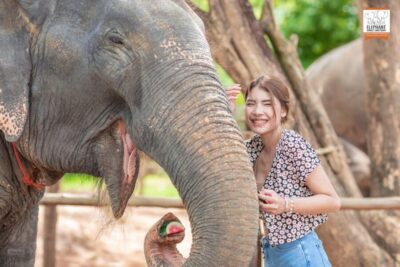 ★ 4.8Elephant Jungle Sanctuary Ethical Feeding ExperienceFrom $284,359 reviews
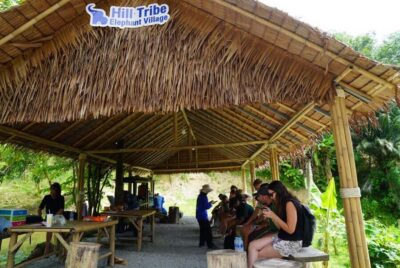 ★ 4.8Elephant Sanctuary Guided Tour with Hotel TransfersFrom $412,020 reviews
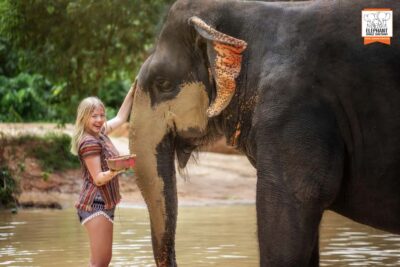 ★ 4.9Elephant Jungle Sanctuary Half-Day Visit with MealFrom $901,800 reviews
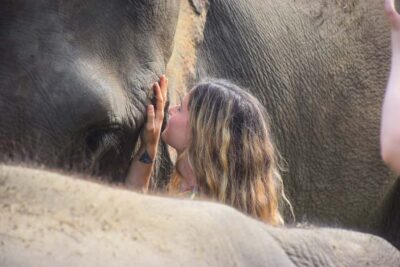 ★ 4.8Elephant Save & Care Program TourFrom $831,790 reviews
 ★ 5.0A Morning with the Elephants at Phuket Elephant SanctuaryFrom $971,693 reviews
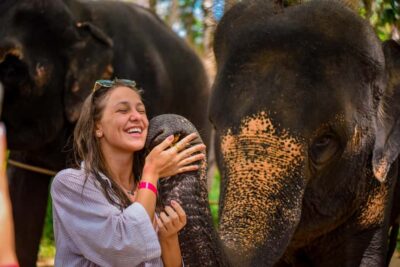 ★ 4.8Lily Elephant Half day Trip on the Beach with lunchFrom $831,420 reviews
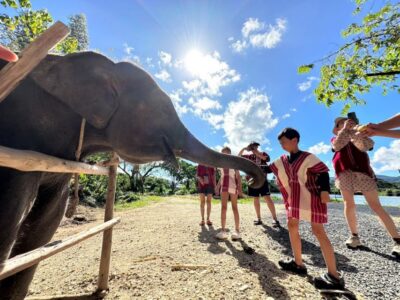 ★ 4.7Elephant Experience with Lunch or Dinner and PickupFrom $671,387 reviews
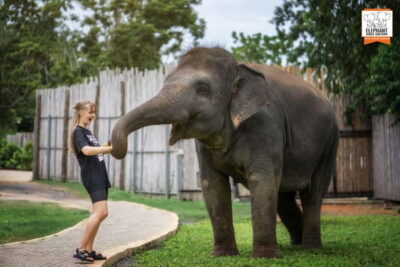 ★ 4.8Elephant Jungle Sanctuary Feed and Shower TripFrom $611,056 reviews
Browse the lists this tour appears in