
Reviewed · ETHICAL ELEPHANT ENCOUNTERS
Phuket Elephant Nature Reserve Ethical Sanctuary
Your good elephant day starts in a jungle.
At Phuket Elephant Nature Reserve, the whole set-up is built around elephants roaming freely and you watching from a respectful distance. I like that you get more than sightseeing: you help make vitamin balls with the mahouts and learn how the sanctuary recycles elephant dung. One thing to consider is the heat and humidity; the reserve is outdoors, so plan for sweaty timing and bring the right comfort items.
You’ll also get a proper meal built into the program, not just snacks and a photo stop. I appreciate the hands-off ethics (no riding, no bathing, no touching, no hand feeding) paired with practical education so you understand what makes a sanctuary different from entertainment. The only drawback for some people is logistics: transport isn’t included, so you’ll need a way to get there (or use nearby public transport).
In This Review
- Quick reasons this is a standout ethical elephant stop
- Ethical elephant sanctuary in Phuket: what makes this visit feel different
- Your first stop: Thai cooking class demo and a real lunch
- Phuket Elephant Nature Reserve: jungle observation and watering-hole time
- Making vitamin balls with the mahouts: hands-off, but still personal
- Elephant dung recycling center: the behind-the-scenes lesson
- Guides, pacing, and what 3 hours 30 minutes really means for you
- What’s included, what to bring, and what to plan for
- Value check: does $39.11 feel fair for an ethical half-day?
- Who should book this, and who might want to skip
- Should you book Phuket Elephant Nature Reserve Ethical Sanctuary?
- FAQ
- How long is the Phuket Elephant Nature Reserve tour?
- Where is the Phuket Elephant Nature Reserve located?
- What are the main activities?
- Is there a Thai cooking class and lunch included?
- Can I bathe, touch, or hand feed the elephants?
- Do I get admission included for the sanctuary?
- Is transport provided?
- What should I bring for the day?
- Is it easy to reach by public transportation?
- Can I cancel for a refund?
- Are service animals allowed?
Quick reasons this is a standout ethical elephant stop
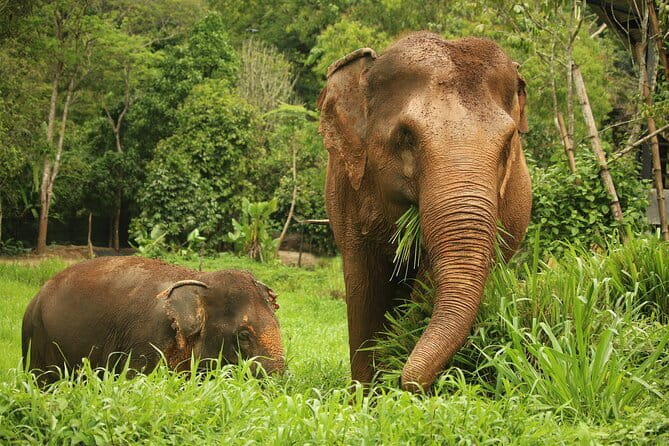
- No riding or bathing, ever: you observe and interact in a hands-off, welfare-first way
- Mahout-led vitamin ball prep: you’re part of feeding, without putting your hands on elephants
- Dung recycling center lesson: you learn what the sanctuary does behind the scenes
- Jungle and watering-hole viewing: good elephant chances without gimmicks
- Thai cooking class demo + lunch: your time isn’t only about elephants
- Short enough to survive Phuket: half-day pacing means fewer hours baking in the sun
Other ethical sanctuaries where you meet the herd, not ride it
- Phuket: Elephant Jungle Sanctuary Half-Day Visit with Meal★ 4.9 · 1,800 reviews
- Phuket: Elephant Save & Care Program Tour★ 4.8 · 1,790 reviews
- A Morning with the Elephants at Phuket Elephant Sanctuary★ 5.0 · 1,693 reviews
- From Phuket: Elephant Jungle Sanctuary Feed and Shower Trip★ 4.8 · 1,056 reviews
Ethical elephant sanctuary in Phuket: what makes this visit feel different
Phuket has plenty of elephant options, but this one is designed around a simple idea: elephant wellbeing beats entertainment. Here, the elephants are cared for in a sanctuary environment where they can move naturally, and you’re there to observe and learn rather than control the experience.
That changes everything for your mindset. When there’s no riding, no bathing, and no touching, you stop thinking of the day as a performance and start paying attention to how elephants behave in their own rhythms. You still get up close visually, you can photograph what you see, and you spend real time at watering points where elephants naturally gather.
The sanctuary also mixes animal time with practical education. You’re not just told to feel good; you learn about what the sanctuary does and why. Even the dung recycling center fits that theme. It’s a reminder that caring for animals involves systems, not just attention.
Guides can make or break a tour like this, and the program seems to lean on strong teaching. I noticed praise for guides such as Tom, Steve, and Dong, all mentioned for explaining the elephants and the ethical reasons behind the sanctuary approach.
Your first stop: Thai cooking class demo and a real lunch
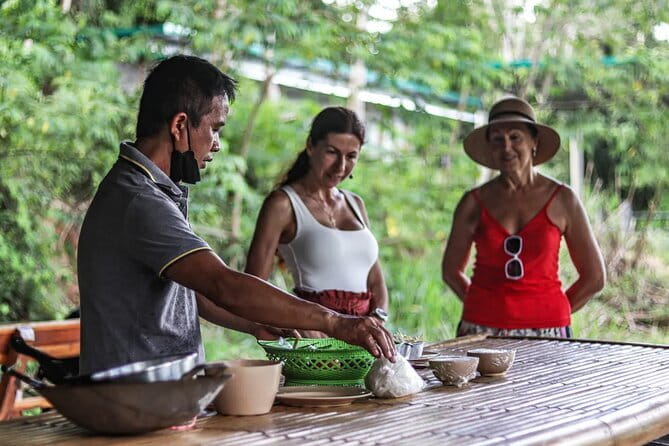
Your half-day program typically starts with Thai cooking. Expect a cooking class demo and then a lunch that’s connected to what you just learned.
This matters more than it sounds. Elephant tours can run long and sweaty, and it’s smart to anchor the day with a full meal component. In several itineraries, the cooking block comes first, then you move into elephant observation and feeding prep afterward. One review mentioned a 13:00 start, with the first hour devoted to cooking and lunch, which lines up with how the program is set up.
What you’ll likely do in the cooking portion is learn Thai cooking basics through a guided demo. You’ll then eat a meal described as very nice, with people specifically calling out that the food matched what they were learning.
Practical tip: eat like you mean it. You’ll be outdoors for elephant viewing, and you don’t want a light lunch that turns into a later snack scramble.
Phuket Elephant Nature Reserve: jungle observation and watering-hole time
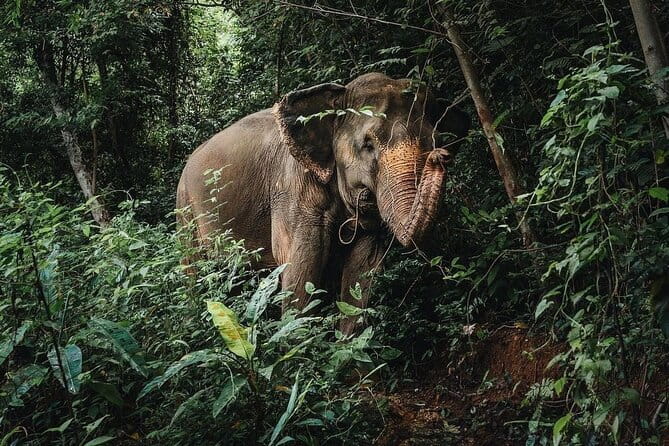
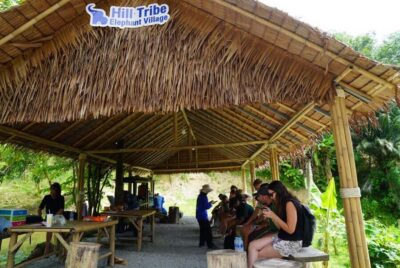
After cooking and lunch, you shift from kitchen energy to jungle observation mode. The sanctuary visit includes time watching elephants in natural surroundings: in the jungle and at watering holes and natural water features.
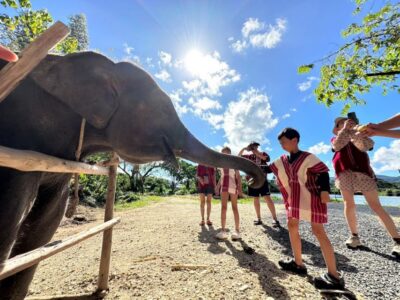
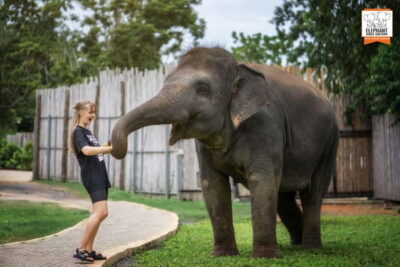
This is where the ethical model shows up. You’re not there to force contact. Instead, your role is to observe the elephants as they come and go. That still means you get close enough to notice details—how they move, how they pause, and how they interact with their environment—without the pressure of manufactured “moments.”
It’s also why your camera helps. The experience is set up for you to observe and photograph elephants in their natural behavior zones. You’ll likely get more valuable photos when you focus on patience rather than posing.
Time outdoors is a factor. People specifically noted that 90 minutes can feel like the right amount of elephant time in the heat and humidity. Since the full half-day program is about 3 hours 30 minutes, you’ll likely have breaks and pacing—but still, treat it as an outdoor visit. Bring a plan for hydration and sun (more on that below).
Making vitamin balls with the mahouts: hands-off, but still personal
One of the most praised parts is the chance to prepare elephant food with the mahouts, the elephant handlers. The activity is hands-on in a way that doesn’t cross ethical lines.
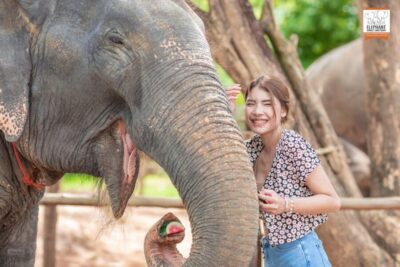
The key detail: you’re making vitamin balls and preparing food for the elephants, but it’s done with a hands-off approach. That means no bathing, no touching elephants, and no hand feeding in the way many commercial attractions do. You participate in preparation and then observe as the sanctuary team supports feeding in a welfare-first manner.
This is also where you learn, not just perform. The guides explain what the elephants need, how the sanctuary manages their care, and why certain interactions are not allowed. People repeatedly highlighted how meaningful it felt to see that the elephants are rescued animals being loved and cared for.
Families tend to love this section too, because it turns the day into education. Kids and adults alike get a clear job to do that doesn’t involve interacting by force. One review mentioned that kids now understand why places offering riding and bathing can be cruel, after experiencing this approach.
If you want the most rewarding “I did something” feeling on an elephant day, this is it.






Elephant dung recycling center: the behind-the-scenes lesson

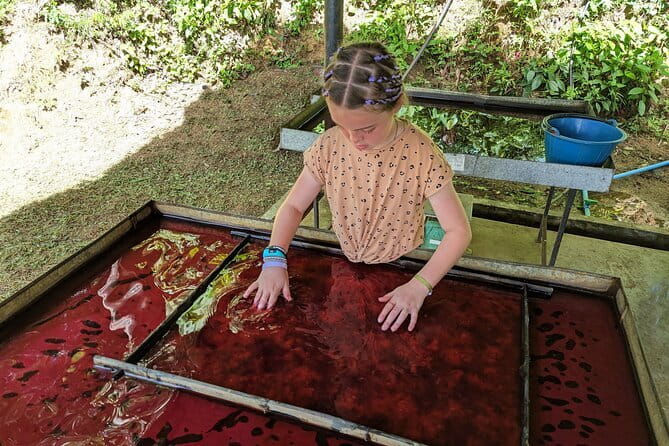
At some point during the half-day, you’ll visit the elephant dung recycling center. Yes, it sounds odd, but it actually fits the sanctuary mission really well.
Why it matters: a sanctuary is a living system. Animals produce waste, and responsible care includes processes that handle it safely and efficiently. Learning about recycling gives you a concrete example of how the sanctuary is set up for long-term wellbeing, not short-term photo ops.
In the experience description, this is directly tied to the education part of the day. In other words, it’s not a random side stop. It’s meant to help you understand sanctuary operations in a way that’s visible to visitors.
I like this stop because it nudges you past vague “ethical” talk. You can judge a place by what it builds and how it manages daily realities. A recycling center is one of those “small” pieces that signals real infrastructure.
Guides, pacing, and what 3 hours 30 minutes really means for you
The program runs about 3 hours 30 minutes. That’s long enough to feel like an experience, but short enough to avoid spending all day in the hardest part of Phuket’s weather.
Still, pacing depends on the exact start time. One review described a 13:00 start where cooking and lunch came first. Others praised the 90-minute elephant-focused portion as a good length, especially because it gets hot and humid.
Here’s how I’d plan if you’re deciding your day in Phuket:
- If you hate long outdoor stretches, don’t stack this with another long beach activity right after.
- If you’re camera-first, arrive ready to slow down. Elephants don’t act on your schedule.
- If you’re booking for a family, expect the day to be structured: cooking, meal, then education and observation blocks.
You’ll also get an experience tour guide, and the guide quality shows up in the reviews through named instructors like Tom, Steve, and Dong. The common theme: they explain the why behind the rules, not just the rules themselves.
What’s included, what to bring, and what to plan for
This is a practical half-day, with most of the big pieces already covered.
Included in the program
- Thai cooking class demo and lunch (half-day program)
- Hands-off meet-and-feed experience with the elephants
- Elephant jungle nature observation
- Elephant dung recycling center (half-day program)
- Making vitamin balls (half-day program)
- Water
- Experience tour guide
- Insurance
- Admission ticket included
- Mobile ticket
Not included
- Comfortable shoes
- Hat and sunglasses
- Your own water bottle for the refill station
- Transport
My take on the shopping list: this is one of those tours where you’ll regret wearing shoes that can’t handle damp ground. Go for something you can stand and walk in without pain. A hat and sunglasses aren’t optional comfort—they protect you during outdoor viewing.
Also, even though water is included, bring your own bottle. The program mentions a water refill station, so you’ll make life easier for yourself.
Value check: does $39.11 feel fair for an ethical half-day?

At $39.11 per person, the price can look almost too low for what’s included: cooking demo, lunch, education stops, and a hands-off feeding prep activity in an ethical sanctuary setting.
The value comes from two things:
1) You’re not paying just for an elephant sighting. You’re paying for a guided, structured half-day with multiple parts: food prep, viewing time at watering features, and the recycling-center lesson.
2) You’re supporting an ethical sanctuary model. That includes day-to-day care costs, and your booking helps cover those expenses.
In the reviews, people repeatedly say it feels worth it specifically because it’s ethical in practice, not just in marketing. No touching, no bathing, no hand feeding. You interact in a way that doesn’t require exploiting animals for entertainment.
The main way the “deal” could shrink for you is if you have to pay extra to solve transport on your own. Transport isn’t included, and if you’re far from public transit or don’t have a simple way to reach the reserve, factor that into your total cost.
Still, for many visitors in Phuket, this is one of the more balanced “money for meaning” choices.
Who should book this, and who might want to skip
This tour fits best if you want elephants in a respectful, welfare-centered setting and you’re okay with a hands-off approach.
You’ll probably love it if:
- You care about ethical elephant treatment and want an experience that avoids riding and bathing
- You like education with your sightseeing (the dung recycling center is a strong sign)
- You enjoy food-related activities, since the Thai cooking demo and lunch are part of the day
- You travel with kids who can handle a structured half-day and learn why certain interactions are harmful
You might reconsider if:
- You want maximum physical interaction. This sanctuary doesn’t allow touching, bathing, or hand feeding.
- You’re very sensitive to heat. It’s outdoors, and people have mentioned humidity as a real factor.
- You prefer fully guided door-to-door logistics. Transport isn’t included.
Should you book Phuket Elephant Nature Reserve Ethical Sanctuary?
If you want an elephant day that doesn’t ask you to ignore your own ethics, book it. The biggest draw is the clear boundary: elephants roam freely, and you watch and learn instead of turning the animals into attractions.
Also, the day doesn’t feel one-note. Cooking demo and lunch give you a full half-day plan, and the vitamin ball prep with the mahouts gives you a real role that still stays respectful. The dung recycling center adds a practical, behind-the-scenes layer that makes the sanctuary feel like a working care system, not just a scenic exhibit.
Only hold back if transport is a hassle for your plans or if you hate outdoor heat. Otherwise, this is a smart way to see elephants in Phuket with a clear conscience.
FAQ
How long is the Phuket Elephant Nature Reserve tour?
The experience runs about 3 hours 30 minutes approximately.
Where is the Phuket Elephant Nature Reserve located?
It’s in Phuket, Thailand.
What are the main activities?
You’ll do elephant observation in the jungle and at natural water features, prepare vitamin balls with the mahouts using a hands-off approach, and visit the elephant dung recycling center. There’s also a Thai cooking class demo and lunch.
Is there a Thai cooking class and lunch included?
Yes. The half-day program includes a Thai cooking class demo and lunch.
Can I bathe, touch, or hand feed the elephants?
No. The experience does not permit bathing, touching, or hand feeding.
Do I get admission included for the sanctuary?
Yes, the admission ticket is included.
Is transport provided?
No. Transport is not included.
What should I bring for the day?
Comfortable shoes are recommended, along with a hat and sunglasses. Bring your own water bottle for the refill station (water is included, but refill station use may be easier with your bottle).
Is it easy to reach by public transportation?
The experience is near public transportation.
Can I cancel for a refund?
Free cancellation is available up to 24 hours in advance for a full refund, based on the experience’s local time.
Are service animals allowed?
Yes, service animals are allowed.
More Tour Reviews in Phuket




More Time With Phuket's Elephants





Keep exploring Phuket and the Andaman coast





Ethical Elephant Encounters, compared.
 ★ 4.8Elephant Jungle Sanctuary Ethical Feeding ExperienceFrom $284,359 reviews
 ★ 4.8Elephant Sanctuary Guided Tour with Hotel TransfersFrom $412,020 reviews
 ★ 4.9Elephant Jungle Sanctuary Half-Day Visit with MealFrom $901,800 reviews
 ★ 4.8Elephant Save & Care Program TourFrom $831,790 reviews
 ★ 5.0A Morning with the Elephants at Phuket Elephant SanctuaryFrom $971,693 reviews
 ★ 4.8Lily Elephant Half day Trip on the Beach with lunchFrom $831,420 reviews
 ★ 4.7Elephant Experience with Lunch or Dinner and PickupFrom $671,387 reviews
 ★ 4.8Elephant Jungle Sanctuary Feed and Shower TripFrom $611,056 reviews
Browse the lists this tour appears in